


Pearl Jewelry Care Tips: Preserving the Luster of Your Organic Gems

Updated: Sep 24
Could your favorite perfume be slowly dissolving your most precious heirloom? It's a heartbreaking thought, yet many pearl owners unknowingly expose their organic gems to harsh chemicals every single day. You cherish that radiant glow, but you likely worry about the delicate surface yellowing or the silk thread suddenly snapping at the worst possible moment. Understanding essential pearl jewelry care tips is the first step in protecting these unique treasures from the elements of daily life.
We know these gems represent more than just fashion; they are symbols of milestones and family legacy. At Robson's Jewelers, we've guided generations of families in preserving their most delicate pieces since 1926. This guide shares the professional secrets we've refined to help you maintain that iconic shimmer and structural integrity. We'll walk you through a simple daily maintenance routine, the safest storage methods, and the subtle signs that your strand requires professional pearl restringing to keep your jewelry secure for years to come.
Table of Contents
Understanding the Organic Nature of Your Pearls
Pearls are unique because they are born within living organisms. Unlike a diamond formed by intense pressure deep in the earth, a pearl is a gift from the sea. This organic nature of pearls makes them softer and more reactive than traditional mineral gemstones. Because they are "living" gems, they require a specific approach to maintenance. Following professional pearl jewelry care tips ensures that these treasures don't lose their vitality over time. They are particularly susceptible to pH imbalances. Common household acids, such as those found in lemon juice or even heavy perspiration, can slowly etch the surface of the gem and destroy its finish.
Why Pearls are Different from Other Gemstones
Fragility is the most significant difference between pearls and other popular stones. On the Mohs scale of mineral hardness, a diamond sits at a solid 10, while a pearl ranks between a modest 2.5 and 4.5. They can be scratched by a stray copper penny or even the metal prongs of a nearby ring in your jewelry box. Pearls also need to "breathe" to maintain their integrity. They thrive on the subtle moisture found in the air and on your skin. If they are locked away in an airtight safe or a plastic bag for too long, they can become brittle and crack. Nacre is the iridescent substance secreted by the mollusk that determines a pearl's longevity and its famous, deep-seated glow. For those who love this connection to the sea, Susas Collection offers jewelry inspired by tropical islands and beaches that captures a similar coastal spirit.
The Role of Luster in Pearl Value
Luster isn't just a simple surface shine; it's the beautiful result of light reflecting through microscopic layers of nacre. These layers act like tiny mirrors stacked upon one another. When pearls are neglected or exposed to harsh environments, they undergo "chalking," where the surface becomes dull, white, and opaque. This damage is often permanent and significantly reduces the gem's value. Interestingly, your own skin oils are a natural part of your pearl jewelry care tips. Wearing your pearls allows them to absorb trace amounts of moisture, which keeps the nacre hydrated and prevents the surface from becoming parched.
Living in a coastal climate like Baytown adds another layer of complexity to pearl ownership. While humidity is generally beneficial for these organic gems, the salt air and intense Texas heat can accelerate nacre dehydration if your jewelry is left in direct sunlight or near air conditioning vents. These environmental factors can turn a radiant heirloom into a lackluster stone if you aren't mindful. Treat them with the same gentleness you would a fine silk garment or an antique painting. A little bit of awareness goes a long way in preserving that signature glow for the next generation.
The 'Last On, First Off' Ritual for Daily Care
The most important foundation of pearl jewelry care tips is the "Last On, First Off" rule. It is a simple habit that preserves the integrity of your gems for decades. Pearls are uniquely porous. They absorb the substances they come into contact with, which means your morning beauty routine can be their greatest enemy. Perfumes, hairsprays, and lotions often contain alcohol and synthetic acids that eat away at the nacre. By making your pearls the very last thing you put on before leaving the house, you ensure these products have already settled into your skin rather than onto your jewelry.
There is a common misconception that pearls love water. While they are born in the sea, they don't belong in the shower or the swimming pool. Chlorine is a harsh "pearl killer" that can cause permanent pitting and discoloration. Even the mild soaps in your shower can leave a filmy residue that suffocates the gem's natural glow over time. Always remove your pearls before any activity that involves water or heavy exertion. If you're unsure about the condition of your strand after a long day, our team at Robson's Jewelers can provide a professional inspection to ensure your jewelry remains in pristine condition.
Step-by-Step Daily Maintenance Routine
Wiping your pearls after every wear is non-negotiable. Use a soft, lint-free microfiber cloth or a genuine chamois to gently buff each pearl. This removes trace amounts of sweat and skin oils that would otherwise sit on the surface. Never use a toothbrush, even a soft one, as the bristles can create microscopic scratches on the delicate nacre. Before you clasp the necklace, take a moment to inspect the strand. Look for any fraying in the silk or a loose connection at the clasp. These small checks prevent a minor issue from becoming a lost heirloom.
Chemical Hazards to Avoid
Your kitchen and bathroom are full of hidden dangers for organic gems. Vinegar, lemon juice, and bleach are highly acidic and will dissolve the calcium carbonate in a pearl almost instantly. We recommend the "30-minute rule" for cosmetics. Apply your makeup, perfume, and hair products at least half an hour before donning your pearls. This allows the volatile chemicals to evaporate completely. For our neighbors in Baytown, the summer humidity presents a unique challenge. High heat leads to increased perspiration, which is naturally acidic. If you've been outside on a humid Texas afternoon, be extra diligent about wiping your pearls down immediately once you return home to neutralize those salts and acids.
Safe Cleaning and Storage Solutions at Home
Even with meticulous daily care, your pearls will eventually require a gentle deep cleaning to remove accumulated oils. Unlike diamonds or sapphires, which can withstand aggressive scrubbing, organic gems demand a far more tempered approach. These pearl jewelry care tips focus on preserving the delicate nacre while protecting the structural integrity of the strand itself. Avoid any commercial "jewelry dips" or harsh chemical cleaners. These products are often formulated for metals and can strip the luster from a pearl in seconds. Instead, create a mild solution using lukewarm water and a few drops of pure, non-detergent soap, such as Castile soap.
How to Clean Your Pearls Safely
The golden rule of cleaning pearls is to never submerge the entire piece in water. If you soak a strand, the silk thread absorbs the liquid and stretches, which eventually leads to cord failure. Instead, dip a soft, lint-free cloth into your mild soap solution and gently wipe each pearl individually. Once you've finished, use a second cloth dampened only with plain water to remove any soapy residue. Always dry your pearls flat on a clean, white towel. Don't hang them to dry. The weight of the damp pearls will pull on the wet silk, causing the thread to lose its tension and shape.
Professional tools like ultrasonic cleaners or steam cleaners are catastrophic for pearls. The high-frequency vibrations of an ultrasonic machine can cause organic gems to crack along their natural growth lines. Similarly, the intense heat of a steam cleaner can dehydrate the nacre, leading to permanent discoloration or "chalking." Stick to manual, gentle methods to keep your treasures safe.
Ideal Storage Conditions
How you store your pearls is just as important as how you clean them. Plastic bags are the primary enemy of organic gems because they create an airtight seal that prevents the pearls from "breathing." This lack of airflow leads to dehydration, making the pearls brittle over time. We recommend using a soft silk pouch or a dedicated, velvet-lined compartment in your jewelry box. This keeps them separate from harder gemstones, like diamonds or gold chains, which can easily scratch the soft surface of the nacre.
If you keep your jewelry in a home safe, be mindful of the environment. Most safes are designed to be bone-dry to protect documents, but this atmosphere is too harsh for pearls. A simple trick is to keep a small glass of water inside the safe or utilize a humidifying packet. This adds just enough moisture to the air to prevent your heirlooms from drying out. These small adjustments in your storage habits will ensure your pearls remain as radiant as the day you first wore them.
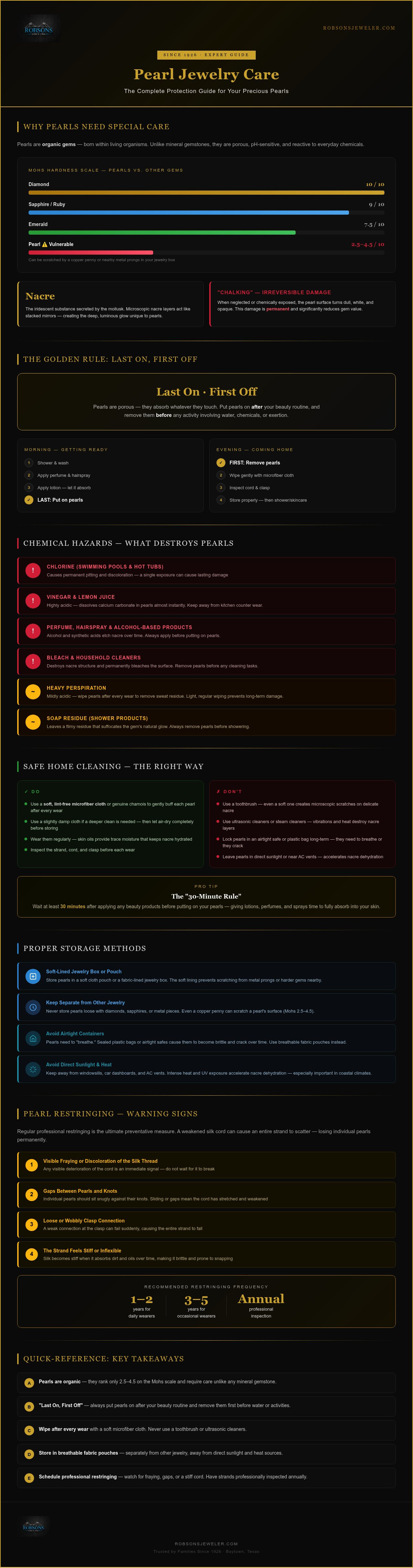
Professional Maintenance: The Importance of Pearl Restringing
While home maintenance is vital, the structural integrity of your strand depends on the "lifeline" hidden inside: the thread. Most fine pearls are strung on natural silk or high-quality nylon. Over time, the combined weight of the gems and the absorption of skin oils cause this cord to stretch. In our humid Baytown climate, this process can accelerate as moisture lingers on the thread after wear. Professional pearl jewelry care tips always include a regular schedule for maintenance to prevent the devastating loss of a pearl if the strand snaps. If you're searching for pearl restringing near me, our family-owned shop has provided this meticulous service since 1926.
A hallmark of quality restringing is the presence of a tiny, hand-tied knot between every single pearl. These knots serve two critical purposes. First, they prevent the pearls from rubbing against each other, which protects the nacre from friction damage. Second, if the strand ever breaks, only one pearl will fall off rather than the entire collection scattering. It's a simple safety feature that provides immense peace of mind for your most cherished heirlooms.
Signs Your Pearls Need Restringing
How do you know when it's time for a professional touch? Look for visible gaps between the pearls and the knots. If your necklace hangs unevenly or feels longer than it used to, the thread has likely stretched beyond its limit. You should also perform the "dirt test." If the thread near the clasp or between pearls looks dark or frayed, it's a sign that oils and grime have penetrated the fibers. This grit acts like sandpaper, abrading the pearls from the inside out. Remember that bracelets often require more frequent attention than necklaces because they endure more movement and constant contact with surfaces.
The Professional Restringing Process at Robson's
At Robson's Jewelers, we treat every strand with the reverence it deserves. Our expert jewelers utilize a traditional hand-knotting technique, selecting a specific silk weight that perfectly matches the drill hole size and color of your pearls. This ensures a drape that is both fluid and secure. While your items are being serviced, it's a wonderful opportunity to receive a certified jewelry appraisal to ensure your collection is properly documented and protected. We invite you to visit our Baytown showroom for a complimentary inspection of your pearls to ensure they remain safe for the next generation.
Preserving Your Legacy: Long-Term Care for Heirloom Pearls
The Value of Regular Professional Inspections
A professional inspection is the best defense against jewelry heartbreak. While you might wipe your pearls daily, a jeweler uses a high-powered loupe to find microscopic issues that the naked eye misses. We look for thinning prongs on pearl rings or a clasp that has lost its tension. Catching these small flaws early prevents the sudden loss of a stone or an entire strand. Many of our neighbors find it helpful to bundle these check-ups with other maintenance, such as watch repair services Baytown. Since 1926, our family-owned shop has served as a guardian for local heirlooms, treating every piece of religious or sentimental jewelry with the same meticulous care we would give our own.
Passing Down the Glow
True legacy involves sharing both the jewelry and the knowledge required to protect it. When you gift a piece of family jewelry, take the time to explain the "Last On, First Off" ritual. It's a simple lesson that empowers the next generation to be responsible caretakers. If an heirloom design feels a bit dated for a younger wearer, consider modernizing it. Our custom jewelry design Baytown services can breathe new life into vintage pearls, perhaps by transforming a long strand into a contemporary bracelet bar piece or a pair of bespoke earrings. This keeps the history alive while ensuring the piece actually gets worn.
Maintaining your collection shouldn't feel like a chore. We invite you to document the history of your pieces, noting the dates of purchase or the milestones they celebrated. This adds a layer of emotional value that transcends the gems themselves. At Robson's Jewelers, we're honored to be part of your family's story. We invite you to visit our showroom for a personalized consultation. Let us help you master the best pearl jewelry care tips so your organic gems continue to shine for generations to come.
Ensure Your Radiant Treasures Shine for Generations
Your pearls are more than just exquisite accessories; they are living records of your life's most beautiful milestones. By embracing these essential pearl jewelry care tips, you protect the delicate nacre from the harsh chemicals and environmental stressors that threaten its iconic glow. Remember that the "Last On, First Off" ritual and thoughtful storage aren't just chores. They are acts of stewardship that preserve the structural integrity of your organic gems for the next generation to cherish.
Daily care is a wonderful start, but professional oversight provides the ultimate peace of mind. At Robson's Jewelers, we've served as Baytown's trusted jewelry repair experts since 1926. Our family-owned shop specializes in meticulous in-house pearl restringing, ensuring every knot is tied with the precision your heirlooms deserve. Schedule your professional pearl inspection and restringing at Robson's Jewelers today. Let's work together to keep your legacy as bright and beautiful as the day it first arrived in your collection.
Frequently Asked Questions
How often should I have my pearls restrung?
You should have your pearls restrung approximately once every year if you wear them frequently, or every two to three years for occasional wear. The silk thread naturally stretches and weakens over time as it absorbs skin oils and moisture. At Robson's Jewelers, we've provided professional pearl restring services to the Baytown community since 1926. Regular maintenance prevents the strand from snapping and ensures your individual gems remain securely knotted in place.
Can I use ultrasonic cleaners for my pearl earrings?
No, you should never use ultrasonic cleaners for any pearl jewelry. The high-frequency vibrations can cause organic gems to crack or shatter along their natural growth lines. These machines are designed for hard minerals like diamonds, not soft, porous pearls. For safe pearl jewelry care tips, stick to gentle hand-cleaning with a soft cloth. If your earrings require a deeper refresh, bring them to our showroom for a professional, non-invasive inspection.
Why are my pearls turning yellow?
Pearls often turn yellow due to extreme dehydration or prolonged exposure to body oils and beauty products. If they are stored in an airtight environment or a bone-dry safe, the nacre loses its natural moisture and begins to discolor. This process can also be a sign of the gem's natural aging. Proper airflow and regular wear actually help prevent yellowing by allowing the pearls to "breathe" and absorb trace amounts of moisture from your skin.
Is it safe to clean pearls with dish soap?
It is only safe to use extremely mild, pure soap that does not contain harsh detergents, dyes, or perfumes. Most common dish soaps are too aggressive and can strip the delicate luster from the nacre. We recommend using a tiny amount of Castile soap diluted in lukewarm water. Always apply the solution with a damp cloth rather than submerging the strand, as soaking the thread can cause it to stretch and eventually rot.
How do I know if my pearls are real or imitation?
The most common DIY method is the "tooth test." Gently rub the pearl against the edge of your front tooth; a real pearl feels gritty or sandy, while an imitation pearl feels smooth and plastic-like. Real pearls also tend to be heavier and have a unique, deep luster that fakes cannot replicate. For a definitive answer, visit us in Baytown for a certified appraisal. Our experts can confirm the authenticity and value of your heirloom.
Can I wear my pearls every day?
Yes, you can wear your pearls every day, and doing so actually benefits the gems. The natural oils from your skin help keep the nacre hydrated and maintain its radiant glow. However, you must follow the "Last On, First Off" rule to protect them from cosmetics and perspiration. Daily wear increases the need for annual inspections, so be sure to check the silk knots for signs of fraying or stretching regularly.
What is the best way to store a pearl necklace?
The best way to store a pearl necklace is flat in a soft, breathable pouch made of silk or velvet. Storing them flat prevents the thread from stretching under the weight of the gems. Keep them in a separate compartment away from harder stones like diamonds or gold chains to avoid surface scratches. Avoid plastic bags or airtight containers, as these organic gems require a small amount of airflow to prevent the nacre from becoming brittle.
Does humidity in Baytown affect my pearl jewelry?
Yes, the high humidity in the Baytown and Seabrook areas can impact your jewelry. While moisture in the air generally prevents pearls from dehydrating, excessive humidity can cause the silk thread to stay damp longer after wear. This can lead to the thread stretching or harboring bacteria more quickly than in drier climates. We recommend local residents have their strands checked every twelve months to ensure the integrity of the cord remains strong despite our coastal environment.

Comments