


Lab Grown Diamond Prices in Baytown by Shape and Quality

A diamond’s shape changes more than its look; it can also influence its price. Lab grown diamond prices in Baytown are shaped by the 4 Cs: carat, cut, color, and clarity, along with the diamond’s shape and the jewelry design around it. Comparable lab-grown diamonds generally cost less than natural diamonds, but the final price depends on the specific stone and setting.
Choosing a diamond for a proposal or meaningful gift means balancing the look you love with the qualities that matter most. This guide explains how lab-grown diamond prices in Baytown are shaped, how they compare with natural diamonds, and how cut, quality, and jewelry style affect the total.
Compare popular shapes, see how cut, color, and clarity affect value, and learn what to consider when comparing a loose diamond with a finished piece of jewelry.
Table of Contents
How do you value a lab grown diamond?
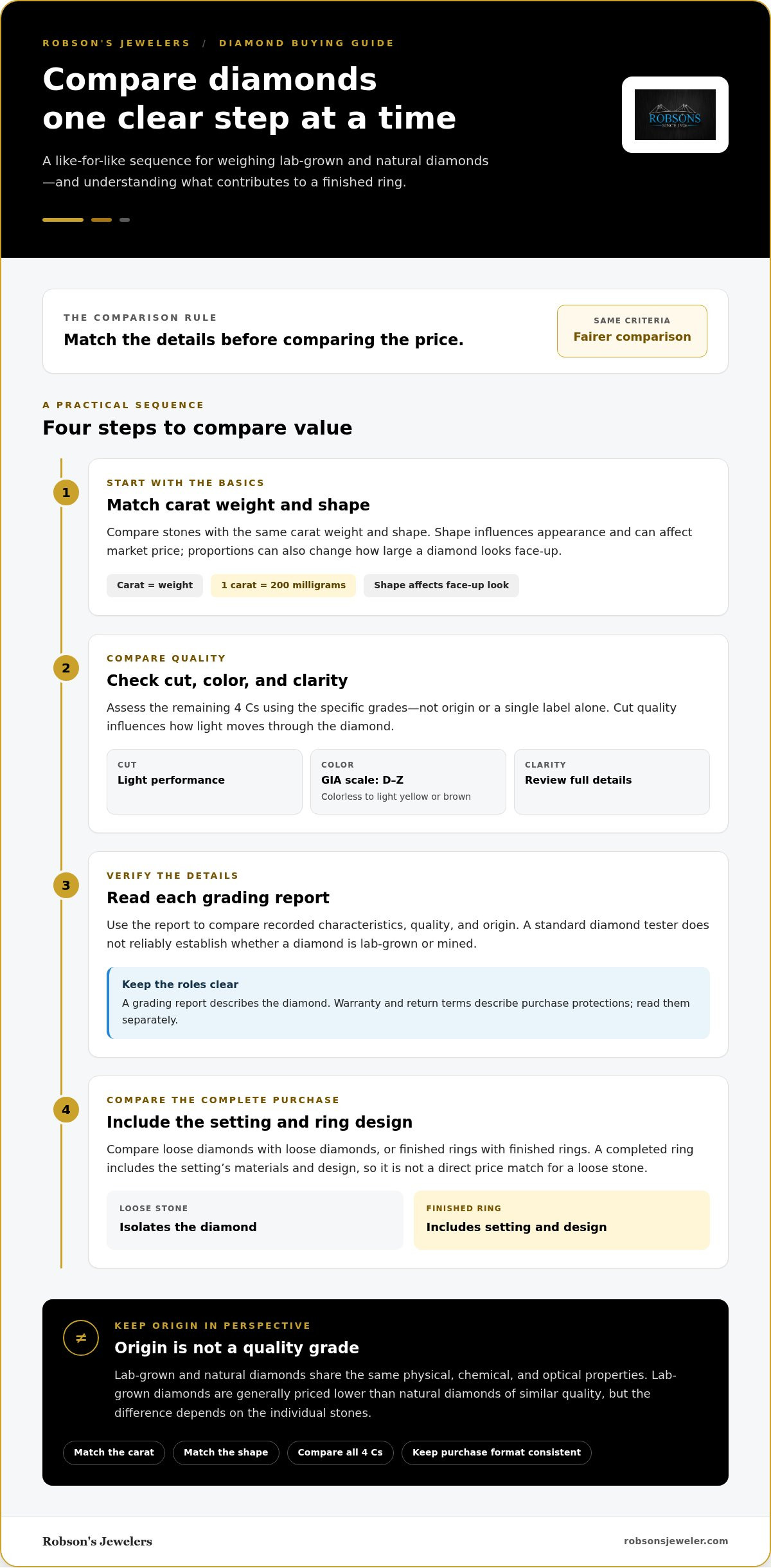
Start with the diamond’s 4 Cs, then compare its shape, grading details, and intended setting. Lab-grown diamonds share the same physical, chemical, and optical properties as mined diamonds.
Lab-Grown and Mined Diamond Costs
Lab-grown and mined diamonds are assessed using carat weight, cut, color, and clarity. Origin affects market pricing, but not their physical, chemical, or optical properties. To compare value, look at stones with similar grades and shapes. A grading report helps you compare recorded characteristics, while the diamond’s appearance and how it suits an engagement ring help guide your choice.
Carat measures weight, not face-up size. One carat equals 200 milligrams, so two diamonds with the same carat weight may look different because of their shape and proportions. A flawless clarity grade may sound appealing, but examine the full grading details rather than treating one label as the entire measure of value.
Retail Prices and Wholesale Costs
Wholesale costs and retail prices represent different points in the supply chain. Retail pricing reflects the finished purchase offered to a customer, while wholesale figures refer to trade transactions. A wholesale figure is not a direct estimate of what you’ll pay for a loose diamond or finished ring.
Are lab-grown diamond prices lower at Baytown stores or online? Neither option is always less expensive. Compare diamonds with matching carat weight, shape, cut, color, and clarity. For a meaningful comparison, include the setting and any included services in the total, rather than comparing a loose stone with a completed ring.
What warranties, certifications, and return policies come with lab-grown diamonds in Baytown? Terms vary by seller and purchase. Read the written warranty, return conditions, and grading report separately. A grading report describes a diamond’s characteristics; warranty and return terms explain the protections for the transaction.
Prices Across Diamond Shapes
Shape affects a diamond’s appearance and can influence its price, so compare like with like. Round diamonds and fancy shapes, such as oval, emerald, princess, and cushion, may differ in market demand and how large they appear face-up. Match carat weight and quality grades before drawing conclusions from listed prices.
For example, compare a round diamond with an oval of similar carat weight, cut quality, color, and clarity. Differences in outline, proportions, and light return can change the look, even when the grading details are similar. Choose a shape that suits your design, then compare stones with matching characteristics to assess value.
Diamond testers have limits. Standard testers can identify a diamond, but they do not reliably establish whether it is lab-grown or mined. Lab-grown diamonds have the same optical properties as mined diamonds, so review the grading report for origin and quality. GIA grades diamond color from D, colorless, to Z, light yellow or brown.
Lab-grown versus natural diamond prices
Lab-grown and natural diamonds form through different processes, but share the same physical, chemical, and optical properties. Natural diamonds form underground over time; lab-grown stones are created using controlled production methods. Because both can display comparable brilliance, differences in supply and origin influence how the industry prices them.
Lab-grown diamonds are generally priced lower than natural diamonds of similar quality. The difference depends on the individual stones, so compare matching carat weight, shape, cut, color, and clarity. A one-to-one comparison is more useful than comparing a lab-grown stone with a natural diamond of different grades or proportions.
When choosing an engagement ring, start with the qualities you care about most. Set a preferred shape and carat weight, then compare grading details for both origins. Appearance depends on more than origin: proportions affect how large a diamond looks face-up, while cut quality influences how light moves through it. These details explain why stones with the same carat weight may look different.
Use this practical sequence: match carat weight and shape; compare cut, color, and clarity; review each grading report; then consider the setting and finished ring design. Keep the purchase format consistent, too. Comparing loose stones isolates the diamond, while comparing completed engagement rings includes the setting’s materials and design.
Origin is not a quality grade. Lab-grown and natural diamonds can each have a range of cut, color, and clarity characteristics. The Gemological Institute of America grades color from D, colorless, to Z, light yellow or brown. Read the report’s specific grades rather than assuming that “lab-grown” or “natural” describes brilliance, durability, or visual appeal.
Price is one factor, not the only measure of value. Consider the look you want, the grading details, and how the stone works with the ring design. If choosing between origins feels difficult, compare stones side by side using the same criteria. You can also explore loose lab-grown and mined diamonds as you narrow your preferences for an engagement ring.
Prices by diamond shape
Shape helps define a diamond’s character and can influence its market price when shopping for lab grown diamond prices Baytown. In October 2026, listed ranges for 1-carat lab-grown diamonds differ by shape, even before comparing individual cut, color, and clarity grades. Use these figures as market comparisons, not as a quote for a particular stone.
Available shapes include round, oval, emerald, radiant, princess, cushion, pear, marquise, and heart. The figures describe listed market prices in October 2026.
These ranges overlap, so shape alone doesn’t determine which diamond is cheaper. A 1-carat cushion range sits above the listed round range, but individual stones vary with their grades and proportions. Compare diamonds at the same carat weight and quality before treating a price difference as a shape premium at Robson's Jewelers.
Specific listings show how size and grades affect a comparison. These examples differ in carat weight and shape, so they illustrate variation between listings, not a controlled price test.
Shape also changes how a diamond looks on the hand. An oval or pear may appear larger face-up than a round of comparable carat weight, depending on proportions. Emerald and radiant outlines create different visual effects, while round cuts are often chosen for their brilliance. Consider outline and sparkle together instead of choosing by carat weight alone.
For a practical comparison, choose one shape, then compare stones with similar carat weight, color, clarity, and cut. Review the grading details, including inclusions, and consider whether the proportions suit your preferred setting. Shape is a design choice; appearance depends on the finished cut as well as the outline.
Finally, compare the diamond with the jewelry style you’re considering. A setting can frame a pear’s point or emphasize an emerald’s long lines, changing the overall impression without changing the stone’s carat weight. Reviewing loose diamonds by shape and picturing them in a setting makes the price comparison more useful.
Cut, color, and clarity effects on price
Two lab-grown diamonds with equal carat weight can have different prices because their cut, color, and clarity grades differ. These characteristics also shape sparkle and appearance. Compare each grade individually, then consider how the diamond looks in its intended setting. A high grade in one category does not automatically make a stone the best value overall.
Cut and sparkle
Cut describes how a diamond’s proportions and finish affect its interaction with light. A well-executed cut can create lively sparkle, while less balanced proportions may appear duller. Compare cut grades and view each diamond face-up if possible. For example, an Excellent cut and a lower cut grade may produce noticeably different visual effects, even when color and clarity are similar.
Cut grades and labels can vary across grading systems, so read the grading report rather than relying on a seller’s shorthand. The report helps you compare stated cut characteristics with the diamond’s visible performance. Shape matters, too: a round stone and an emerald shape reflect light differently, so judge each on its own merits.
Color and clarity grades
The Gemological Institute of America grades diamond color from D, colorless, to Z, light yellow or brown. A higher color grade may affect price, but the setting can influence how color appears. Metal color and surrounding design may make a subtle tint more or less noticeable. Compare stones in the setting style you’re considering, not only on their own.
Clarity describes internal inclusions and surface blemishes. Grades range from stones with no visible characteristics under professional examination to those with inclusions visible without magnification. An eye-clean VS2 lab-grown diamond can save 20% or more, according to the market price guidance. That makes visual inspection useful: a lower clarity grade may still look clean to the unaided eye.
Look at an inclusion’s location, size, and contrast, not just its clarity grade. A mark near the center may attract more attention than one near the edge. Magnification reveals details, while normal viewing shows what’s visible during everyday wear. Compare the report with the stone’s appearance before weighing a higher clarity grade against other qualities.
Balance the grades
Use a simple comparison: match carat weight and shape, then assess cut, color, and clarity side by side. The recommended balance is Excellent or Ideal cut, D-H color, and VS1-SI1 clarity. These are selection guidelines, not a rule that every buyer needs the highest grade in every category.
Ethical considerations are separate from cut, color, and clarity grades. If they matter to your purchase, review the information associated with the diamond’s origin. For a personal comparison, prioritize the features you notice most: sparkle, visible inclusions, color, or how the stone complements its setting.
Lab-grown diamond jewelry prices
Jewelry cost includes more than the loose stone. A finished piece combines the diamond, its setting, metal, and design, so a loose-stone listing cannot stand in for a ring’s total price. In Baytown, jewelers’ prices depend on the specific stones and finished design. The market range for loose lab-grown diamonds is $718 to $5,000, with a median of about $1,700, based on 55 samples from 5 sources collected October 22, 2026. This is market context, not a local jeweler’s quote or a price for finished jewelry.
Which Baytown jewelers sell lab-grown diamonds, and what are their prices? Compare local jewelers’ listings and in-store options by the exact stone, grading details, and setting; the market range above applies to loose lab-grown diamonds, not a named seller or completed piece. A 1-carat stone and a larger stone can differ substantially in price, while two stones of equal weight can differ because of cut, color, and clarity.
To compare finished jewelry fairly, separate the diamond from the setting. First note the stone’s carat weight, shape, and grading details. Then consider the setting’s metal, design, and any additional stones. A solitaire engagement ring and a ring with accent diamonds are different purchases, even if their center stones have identical properties. Ask for a component breakdown so you understand what the total includes.
The visible size of a center stone also affects the overall look of a finished piece. Shape and proportions change how much of the diamond appears face-up, while a setting can emphasize or frame its outline. Compare the actual stone and design together rather than relying on carat weight alone. If you’re choosing between two rings, assess how each looks on the hand and whether the setting suits your style.
Resale is another consideration, but purchase price and resale value are not the same measure. Market estimates place lab-grown diamond resale returns at 10%-30% of the purchase price. That estimate doesn’t determine the value of an individual piece; the stone, setting, condition, and resale circumstances all matter. Buy for the design and qualities you value, rather than treating a diamond as a guaranteed financial return.
For a useful comparison, gather details for each option: loose stone or finished jewelry, diamond grades, shape, setting, and total price. Then compare like with like. Robson’s Jewelers offers loose lab-grown diamonds and custom jewelry design for shoppers considering a stone and its finished setting. Explore lab-grown diamond options as you refine the look and design you want.
Robson's Jewelers: Engagement Rings
At Robson's Jewelers, you can compare loose lab-grown diamonds and explore how a stone’s shape, grading, and proportions work with an engagement ring setting. If you have a particular design in mind, custom jewelry design lets you shape a ring around your preferences.
Start with your priorities: which diamond qualities matter most, which shape you prefer, and whether you’re choosing a loose stone or a finished ring. This gives you a practical basis for comparing options while keeping the overall look in view.
For a personal next step, contact Robson's Jewelers to discuss engagement rings and diamond options.
Choose a Ring That Feels Like Yours
Your next step is to turn your priorities into a design decision. Consider what will make the ring meaningful to you, from its overall style to how the center stone sits in the setting. Lab-grown diamond prices in Baytown are one part of the decision; the aim is to choose a piece you’ll be happy to wear and celebrate for years to come.
Robson's Jewelers offers engagement rings and custom jewelry design, as well as jewelry repair for treasured pieces. Visit the showroom in Baytown with your ideas, inspiration, or a design you already love, and start a conversation about what matters most to you.
Contact Robson's Jewelers today to talk through your engagement ring or custom design plans. Take the next step with confidence and create a piece that feels unmistakably yours.
Frequently Asked Questions
Are lab diamonds certified by GIA or IGI?
Some lab-grown diamonds come with grading reports from GIA or IGI, but reports are specific to individual stones. Check the issuing laboratory, report number, and whether the report identifies the diamond as laboratory-grown. A report documents assessed characteristics; it is not a warranty or return policy. Keep the report details with your purchase records so you can match them to the stone later.
How are these prices calculated?
Diamond prices reflect the stone’s carat weight, cut, color, clarity, and shape, along with market conditions. Jewelry prices also include the setting and design, so compare loose stones with loose stones and finished pieces with finished pieces. For example, compare two 1-carat stones with similar grades before treating their price difference as meaningful. A grading report helps identify whether the stones are genuinely comparable.
How often are these prices updated?
There is no single update schedule for all jewelers or price listings. Prices can change as inventory and market offers change. The aggregate market range cited for loose lab-grown diamonds was collected on October 22, 2026, from 55 samples across 5 sources, and was valid through November 21, 2026. Treat that as a dated market snapshot, not a permanent price or a store quote.
What is the affordability of lab diamonds in comparison to natural diamonds?
In 2026, lab-grown diamonds of comparable quality are typically priced 81%-86% below natural diamonds. The actual difference depends on matching carat weight, shape, cut, color, and clarity. If you’re setting a budget for a ring, compare stones with similar grades and include the setting in each total.
What are current lab-grown diamond prices in Baytown, Texas?
For a market reference rather than a Baytown jeweler’s quote, loose lab-grown diamonds were typically listed between $718 and $5,000, with a median of about $1,700. That range reflects 55 samples collected on October 22, 2026, across 5 sources. Individual stones vary with their specifications, and a finished ring includes its setting. The lab-grown diamond prices in Baytown you encounter depend on the specific stone and design.
What is the average price of a 1-carat lab-grown diamond in Baytown?
That is a broad market figure, not a guaranteed local price or a quote for a particular stone. A 1-carat diamond’s cut, color, clarity, shape, and grading report can all affect its listed price. Compare those details before using the average to plan a jewelry purchase.
How much do 0.5-, 1-, 2-, and 3-carat lab-grown diamonds cost?
For U.S. These are market ranges for loose stones, not prices for a finished ring or a specific Baytown seller. Quality grades and shape explain why stones of the same weight can have different prices.
How do lab-grown diamond prices vary by cut, color, clarity, and carat?
Carat weight, cut, color, and clarity all influence a diamond’s listed price. Higher color or clarity grades can raise the price, while cut affects how the stone handles light and appears to the eye. Compare stones with matching grades and shape to isolate one factor at a time. For instance, comparing diamonds with similar color and clarity can help show how different cut grades affect the comparison.
Comments