


Rose Gold Engagement Rings in Seabrook: Metal and Gemstones

The gemstone can shape a rose gold ring’s character as much as the metal itself. If you’re considering rose gold engagement rings in Seabrook, note that rose gold gets its warm pink hue from copper mixed with pure gold, sometimes with a small amount of silver. That blush tone can complement stones ranging from bright diamonds to richly colored gems.
If you’re drawn to rose gold, you may already appreciate its warmth and distinctive color. The practical next step is choosing a gemstone and gold alloy that work well together, whether you prefer a soft, coordinated look or vivid contrast.
Here, you’ll learn what rose gold is, which gemstones pair well with it, and how it compares with yellow and white gold. We’ll also explain the difference between 14k and 18k rose gold, so you can weigh color, gold content, and everyday wear as you picture a ring that feels personal and lasting.
Table of Contents
What is Rose Gold?
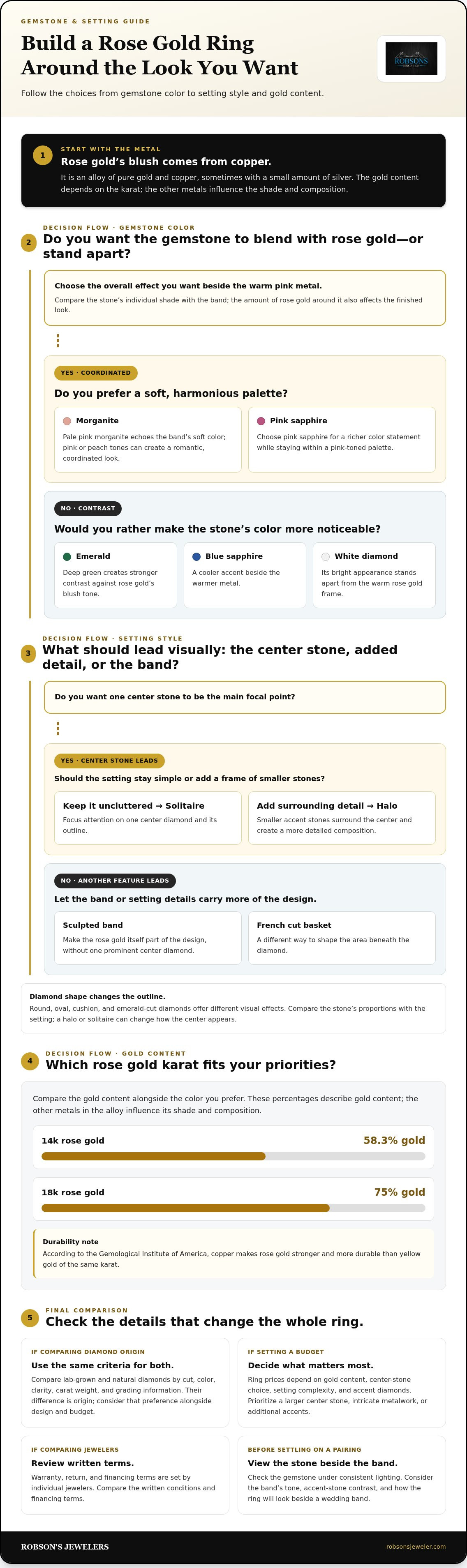
Rose gold is an alloy of pure gold and copper, sometimes with a small amount of silver. Copper gives the metal its warm pink hue, while the gold content depends on its karat. In 14k rose gold, gold makes up 58.3% of the alloy; in 18k rose gold, it makes up 75%. The remaining metals influence the shade and composition. Rose gold was originally called Russian gold and was used in 19th-century Russia.
When considering rose gold engagement rings in Seabrook, start by picturing the ring’s overall silhouette. A solitaire focuses attention on one center diamond, while a halo surrounds the center stone with smaller accents. A French cut basket setting offers another way to shape the area beneath the diamond. Oval, cushion, and round diamonds are popular choices for rose gold. Each shape catches the eye differently, so compare the outline and setting together.
Rose gold can also frame colored gemstones. A pale stone can create a soft, harmonious effect, while a deeper hue can stand out against the pink metal. For an initial comparison, consider the stone’s color, the band’s tone, and whether accent diamonds should blend in or add contrast. The setting matters too: a halo emphasizes the center stone, while a solitaire keeps its outline uncluttered.
There’s no single required arrangement for the center stone. Choose a center diamond for a traditional focal point, or consider a design that uses accent stones and metalwork without one prominent center diamond. For example, a sculpted band can make the rose gold itself part of the design. The right choice depends on whether you want the center stone, surrounding details, or band to lead visually.
To compare lab-grown and natural diamond rings, use the same criteria for both: cut, color, clarity, carat weight, and grading information. The difference is origin, so consider that preference alongside the ring’s design and your budget. Round, oval, and cushion are available diamond shapes; carat size depends on the center stone selected. Compare the diamond’s proportions with the setting, since a halo or solitaire can change how the center appears.
Ring prices depend on the gold content, center-stone choice, setting complexity, and accent diamonds. Set a budget first, then decide which features matter most: a larger center stone, more intricate metalwork, or additional accents. Warranty, return, and financing terms are set by individual jewelers, so compare the written conditions and financing terms before deciding. Online jewelers can deliver rings to Seabrook, Texas; review the listed ring details and delivery terms as part of your selection.
Gemstones that complement rose gold
Rose gold’s pink warmth can create harmony or contrast with a center gemstone. Pale pink morganite echoes the band’s soft color, while deep green emerald creates stronger contrast. White diamonds offer another direction: their bright appearance stands apart from the warmer metal. Think about the overall effect you want before choosing a stone, rather than automatically matching the band and gem.
For a romantic, coordinated look, consider stones with pink or peach tones. Morganite can blend gently with rose gold, while pink sapphire may create a richer color statement. For contrast, compare an emerald’s green with the band’s blush hue, or consider blue sapphire for a cooler accent. These pairings are visual suggestions, not rules. The stone’s individual shade and the amount of rose gold around it both affect the finished look.
Diamonds are versatile in rose gold settings because the metal provides a warm frame around a bright center. A solitaire keeps attention on one diamond and its outline. A halo adds smaller surrounding stones, making the center part of a more detailed composition. For a quieter design, choose a center diamond without a halo and let the band’s color do more of the work. Emerald-cut diamonds bring crisp lines to the warm setting.
Use this simple comparison when narrowing your gemstone options:
Choose harmony: Compare rose gold with morganite or a pink sapphire.
Choose contrast: View an emerald or blue sapphire beside the metal.
Choose a classic focal point: Pair a center diamond with a solitaire setting.
Choose added detail: Consider a halo, then compare how its smaller stones frame the center.
Look at the gemstone under consistent lighting and compare it beside the band. Check whether its color appeals to you against the pink metal and whether the setting keeps focus on the feature you prefer. Even a small accent can change the ring’s balance when the center stone stays the same. Sketching a combination you like, such as emerald and rose gold or diamond and rose gold, can clarify your preferences.
Gemstone choice also shapes how the engagement ring relates to other jewelry. If you plan to wear a wedding band beside it, consider whether the colors feel balanced together. For a personal design direction, explore engagement ring design ideas alongside the gemstone and metal combinations that appeal to you.
Rose gold compared with yellow and white gold
Color is the clearest difference among rose, yellow, and white gold. Rose gold has a warm pink tone because copper is part of its alloy. Yellow gold keeps a familiar golden appearance, while white gold offers a pale, silvery look. Compare all three beside the same diamond, since setting color can change the impression of its brightness. A timeless choice depends on the color you enjoy against your skin and alongside other jewelry.
Gold content also matters. In 14k gold, the alloy contains 58.3% gold; 18k gold contains 75% gold. Those figures describe gold content, not color by themselves. The other metals in each alloy influence its appearance. Rose gold’s copper creates its distinctive blush, while yellow and white gold use different alloy compositions to achieve their colors. Compare pieces in the same karat when you want to focus on color rather than gold content.
Durability offers another useful point of comparison. According to the Gemological Institute of America, copper makes rose gold stronger and more durable than yellow gold of the same karat. That comparison applies to matching karats, such as 14k rose gold beside 14k yellow gold. It doesn’t establish that rose gold is stronger than every white gold alloy. Consider the metal, setting design, and your daily routines together when weighing a ring for regular wear.
Try these comparisons when choosing an engagement ring and wedding band:
For warmth: Compare rose gold with a diamond and notice the contrast between pink metal and bright stone.
For a classic gold tone: View yellow gold beside the same stone and setting style.
For a cooler look: Compare white gold with rose gold under the same lighting.
For a coordinated set: Place the engagement ring beside a wedding band in each color.
A mixed-metal pairing can be a considered alternative to matching every piece. For example, a rose gold engagement ring beside a white gold wedding band creates contrast without changing the center stone. Matching metals can make the set feel visually continuous, while different colors distinguish each ring. View the rings together from above and from the side, because band width and setting height affect how the colors meet.
Use a simple decision process: choose your preferred color first, compare the same karat where possible, then assess the engagement ring with its wedding band. A 14k or 18k stamp tells you the gold proportion; the alloy’s other metals help create the final color. The right comparison is the one that balances appearance, gold content, and how you plan to wear the set.
14K and 18k rose gold
The main distinction between 14k and 18k rose gold is gold content. A 14k alloy contains 58.3% gold, while 18k contains 75%. The remaining portions consist of other metals that help create the alloy’s strength and color. Both are used for engagement rings, so the choice comes down to how you weigh gold content, shade, and everyday wear.
Copper contributes to rose gold’s signature pink tone. A 14k rose gold alloy is listed as containing 32.5% copper, compared with 22.2% in 18k rose gold. That higher copper proportion gives 14k a useful point of comparison when you’re considering the metal’s composition. The final appearance also depends on the full alloy and the ring’s design, so compare finished rings in person when assessing their color.
For everyday use, both 14k and 18k gold alloys are described as strong enough for regular wear. Copper also affects strength: according to the Gemological Institute of America, copper makes rose gold stronger and more durable than yellow gold of the same karat. Consider your routine and the setting’s construction, especially if the ring has a raised center stone or detailed accents.
Use these points to compare the two karats:
Choose 14k for its composition: It has 58.3% gold and 32.5% copper.
Choose 18k for higher gold content: It has 75% gold and 22.2% copper.
Compare the color: View both alloys beside the same diamond or gemstone.
Assess the design: Check how the band, setting, and center stone work together.
A beautiful rose gold ring starts with the details you want to prioritize. For example, a 14k band paired with a cushion-cut diamond combines a defined stone shape with rose gold’s warm hue. An 18k band offers a higher proportion of gold. Compare both options with the same setting style, so the karat and color remain the main differences.
Think beyond the engagement ring, too. If you plan to wear a wedding band beside it, compare the two rings together rather than choosing each in isolation. Matching karats creates consistency in gold content, while the band’s shape and setting determine how the rings sit beside one another. Compare their profiles and colors under the same lighting.
In short, 14k offers a lower gold proportion and a higher listed copper proportion; 18k contains more gold. Neither choice is automatically right for every wearer. Compare composition, shade, setting, and the way each ring fits your daily preferences. That practical side-by-side review can make the decision clearer than karat alone.
Which Seabrook jewelers offer custom rose gold engagement ring design?
Look for a jeweler offering both engagement rings and custom jewelry design. These services let you explore a ring shaped around your preferred metal, gemstone, and setting. For shoppers comparing rose gold engagement rings in Seabrook, start by defining what “custom” means to you. It might mean adapting a setting, selecting a loose center stone, or developing a design from an initial idea.
Begin with a short design brief. Note your preferred rose gold karat, center stone, and setting style. For example, you might envision a cushion-cut diamond in a solitaire setting, or an emerald paired with a halo. Add practical preferences, such as a smooth band profile or a wedding band that sits close beside the engagement ring. These details give your jeweler a clear starting point.
Next, separate essential features from flexible ones. The gemstone may be your priority, while the setting can adapt to it. Or you may have a particular silhouette in mind, such as a solitaire, and remain open to different stones. Natural and lab-grown diamonds are both options. Compare their grading details and appearance, then decide which best fits your preferences.
Before settling on a design, discuss how its components work together. A raised center stone creates a different profile from a lower-set design. A halo changes the visual emphasis, while a plain band keeps attention on the center. Consider how the gemstone fits the setting, how the ring sits beside a wedding band, and how the gold color complements the stone. These details help turn inspiration into a specific design direction.
Use this checklist to prepare:
Metal: Choose the rose gold karat and shade you prefer.
Center stone: Decide whether you favor a diamond or colored gemstone.
Setting: Compare a solitaire, halo, and other suitable designs.
Daily preferences: Consider band shape, profile, and wedding-band pairing.
Design priorities: Identify which details must stay and which can adapt.
A custom design is especially useful when a ready-made setting doesn’t match your stone or style preferences. Bring reference images or a family piece for inspiration, and describe the details that matter most. A jeweler offering custom jewelry design can use those preferences to guide the design conversation. Explore custom jewelry design options as a next step toward shaping a rose gold engagement ring around your choices.
Robson's Jewelers: Engagement Rings
Robson’s Jewelers can help you explore engagement rings and custom jewelry design when you’re ready to shape your preferences into a ring. Bring ideas for rose gold, a preferred gemstone, or a setting style to guide the design conversation. If you’re still comparing center stones, loose lab-grown diamonds are available to consider alongside ring designs.
Custom design can be a useful next step if you have a particular combination in mind, such as a rose gold setting with a chosen diamond shape. If you already own a ring that needs attention, Robson’s Jewelers also provides jewelry repair. Your starting point depends on whether you’re choosing a complete engagement ring, considering a loose stone, or developing a design around your preferences.
For a personal conversation about engagement rings or custom design, contact Robson’s Jewelers or visit robsonsjeweler.com.
Make your ring choice personal
The next step is turning inspiration into a clear design direction. Before choosing rose gold engagement rings in Seabrook, consider what you want the ring to express: a meaningful gemstone, a distinctive setting, or a design that feels unmistakably yours. A few notes or reference images can help you describe your vision and focus your decision.
Robson’s Jewelers offers engagement rings and custom jewelry design for people weighing a finished ring against a more personal concept. Jewelry repair can also help when a treasured existing piece needs attention. Choose the path that suits your plans, whether you’re beginning with a new design or bringing a ring back into wearable condition.
Let your preferences lead, then take the next step at your own pace. Contact Robson's Jewelers to discuss your engagement ring ideas. A thoughtful choice can become a lasting part of your story.
Frequently Asked Questions
Why Are Some Rose Golds Pinker Than Others?
The copper proportion and other metals in the alloy affect rose gold’s shade. A higher copper proportion can create a pinker appearance, while different alloy compositions produce subtler tones. Compare rings of the same karat side by side, then view them under consistent lighting. This helps distinguish alloy color from changes caused by lighting, gemstone color, or the amount of visible metal in the design.
What jewelry stores near Seabrook, Texas sell rose gold engagement rings?
Robson’s Jewelers in Baytown offers engagement rings and custom jewelry design for Seabrook-area shoppers. The custom design service gives you a way to discuss a rose gold concept, including your preferred gemstone and setting. Bring a reference image or describe the look you have in mind. Comparing a finished ring with a custom design can clarify which details matter most to you.
What rose gold engagement ring styles and settings are available in Seabrook?
Rose gold engagement ring styles include solitaire, halo, and French cut basket settings. Consider how each frames the center stone and how the ring will sit beside a wedding band. For instance, a detailed setting may call for a simpler band, while a solitaire leaves room to add visual interest elsewhere. Compare the ring’s side profile as well as its appearance from above.
How much do rose gold engagement rings cost at Seabrook-area jewelers?
The price of a rose gold engagement ring depends on its center stone, gold karat, setting design, and accent details. A diamond’s characteristics and whether it’s lab-grown or natural also shape the overall cost. To stay within budget, decide which feature matters most, such as the center stone or intricate metalwork. Then compare designs with that priority held steady, rather than judging rings by appearance alone.
How do 14K and 18K rose gold engagement rings compare in price and durability?
With other design details held equal, 18K generally costs more for its higher gold content, while 14K contains a larger share of alloy metals. Compare rings in the same setting style and with similar stones to focus on how karat affects composition and cost.
What diamond shapes and carat sizes are available for rose gold engagement rings near Seabrook?
Popular options include round, oval, and cushion diamonds; emerald cuts are another style to consider. Carat size depends on the specific center stone selected.
What warranties, return policies, and financing options do local jewelers offer?
The listed store offers 30-day returns. Warranty and financing terms are set by individual jewelers, so compare their written conditions before deciding.
Comments