


Buy Lab Grown Diamonds in Mont Belvieu: Prices and Resale

A lab-grown diamond is a real diamond, not a look-alike. Lab-grown and natural diamonds are graded using the same GIA and IGI scales. If you plan to buy lab-grown diamonds in Mont Belvieu, understanding what those grades show, and what they do not, can help you compare stones with confidence.
It makes sense to weigh both beauty and practical details when choosing a diamond for a milestone. Size, cut, color, clarity, and the grading report all affect how a stone looks and how its price is assessed. Resale value is a separate consideration from the original purchase price.
This guide explains how lab-grown diamonds are made and evaluated, what to compare in carat weight and cut, and why resale value may differ from the initial price. You’ll also learn how a jeweler’s services can support an informed choice, so the diamond feels right for the occasion and the years ahead.
Table of Contents
Is a Lab-Grown Diamond a Real Diamond?
Yes. A lab-grown diamond is a real diamond, and lab-grown and natural diamonds are graded using the same GIA and IGI scales. This shared framework lets shoppers compare documented characteristics rather than relying on appearance alone.
Certification and Diamond Grading
A diamond grading report records assessed characteristics such as color, clarity, and cut, giving buyers consistent terms for comparing stones. Use the report to match the listed grades to the individual diamond. It supports an informed comparison, but it does not replace viewing the stone and considering how its qualities work together.
IGI and GIA Reports
IGI and GIA are grading organizations whose scales are used for lab-grown and natural diamonds. A report from either can help you interpret a stone’s stated color, clarity, and cut. Compare the report details with the specific diamond, rather than treating the organization’s name as a grade or a promise of resale value.
Independent grading matters because color, clarity, and cut describe different aspects of a diamond. Color grades indicate how colorless a stone appears; clarity describes its internal or surface characteristics; cut concerns how its proportions and finish affect appearance. No single grade tells the whole story, so consider the details together.
For example, a representative precision lab-grown diamond is 1.01 carats, E color, VS1 clarity, and round cut. Each attribute answers a different question: carat gives its weight, E identifies its color grade, VS1 describes its clarity grade, and round names its shape. A second example is a 1.71-carat D-color VS1 oval-cut precision lab-grown diamond. Those specifications make comparison more concrete than carat alone.
IGI and GCAL are examples of independent diamond-certification laboratories. A report from an independent laboratory gives buyers documented grading to review. Compare its recorded characteristics with the diamond’s description, especially when weighing stones with different color, clarity, or cut grades.
Lab-grown diamonds can be produced using two dominant methods: HPHT and CVD. HPHT has been used to grow diamonds since 1950. The growth method helps explain how a stone is created, while its report focuses on the graded characteristics used for comparison. Neither method replaces the practical value of examining the diamond’s report and appearance side by side.
For a round brilliant, the arrangement of 57 facets follows a fixed geometric relationship. That design helps explain why cut is distinct from shape: round describes the outline, while cut grades assess the diamond’s craftsmanship and light performance. For shoppers comparing certified stones, reports offer a structured starting point, while color, clarity, and cut help clarify which differences matter most.
Can I buy a round lab diamond over two carats?
Yes, round lab-grown diamonds over two carats are available. When comparing options to buy lab-grown diamonds in Mont Belvieu, consider face-up measurements, cut, and clarity alongside carat weight.
Balancing Diamond Size and Clarity
Balancing size and clarity means considering both a diamond’s visible spread and its clarity characteristics. For round brilliants, VS1 and VS2 grades are eye-clean in almost every case. That can help you assess whether a higher clarity grade matters to your priorities. Compare the grading details with the stone’s appearance, rather than using clarity as the only measure of its visual appeal.
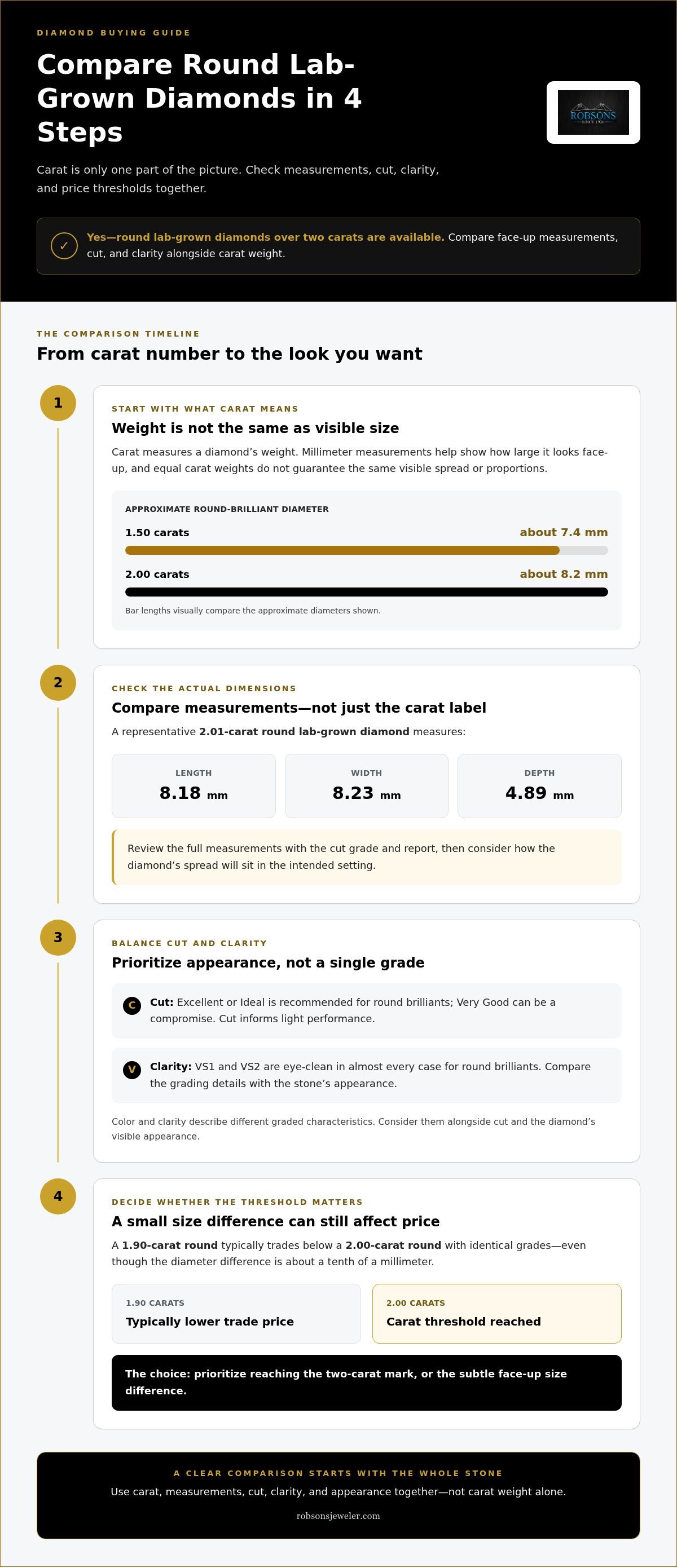
Carat measures weight, while millimeter measurements help show how large a diamond looks face-up. A 1.50-carat round brilliant measures about 7.4 millimeters in diameter, compared with about 8.2 millimeters for a 2.00-carat round. Check these dimensions when comparing stones, because equal carat weights don’t guarantee the same visible spread or proportions.
Thresholds can influence pricing even when size differences look slight. A 1.90-carat round typically trades below a 2.00-carat round with identical grades, although the diameter difference is about a tenth of a millimeter. That distinction helps frame the choice: decide whether reaching the two-carat mark matters more than the subtle difference in face-up size.
Cut, Color, Clarity, and Carat
Cut, color, clarity, and carat describe separate qualities that shape a diamond purchase. Excellent or Ideal cut grades are recommended for round brilliants, while Very Good can be a compromise. Cut informs light performance; color and clarity describe other graded characteristics. Carat is weight, so compare it with the diamond’s actual measurements.
For another comparison point, a representative 2.01-carat round lab-grown diamond measures 8.18 x 8.23 x 4.89 millimeters. Compare those dimensions with the stone’s cut grade and report, then consider how its spread will sit in the intended setting. A buyer aiming for a particular look may prefer evaluating the full measurements instead of focusing only on a carat threshold.
Color and clarity grades can help narrow your choices, but consider them alongside cut and appearance. Two stones with similar carat weights may differ in spread, proportions, or visual character. If you plan to buy lab-grown diamonds in Mont Belvieu, compare the listed characteristics and measurements, then consider how the diamond will complement the ring design.
For a closer comparison, explore loose lab-grown diamonds and consider how each stone’s dimensions suit your preferred setting.
Carat-weight price thresholds and resale considerations
For the same size and quality, lab-grown diamonds generally cost less than natural diamonds. The price difference reflects market conditions and availability, while the specific stone’s carat weight and grades also shape its value.
Carat thresholds can affect how stones are priced, even when their visible size is close. A 1.90-carat diamond typically trades below a 2.00-carat round of identical grade, although their diameter difference is about a tenth of a millimeter. That distinction shows why a threshold can influence asking prices more than the difference looks to the eye.
Price does not rise in a perfectly even line with carat weight. A stone just below a familiar threshold may be priced differently from one just above it, even when their face-up sizes differ only modestly. Compare the report, measurements, cut, color, and clarity to judge whether crossing that threshold matters for your priorities.
For an engagement ring, the center stone is only part of the purchase. The setting, metal, design, and craftsmanship also contribute to the ring’s appeal and resale prospects. A grading report identifies the diamond’s stated characteristics, while its condition and the finished ring’s design may shape how a future buyer views it.
Resale value is not the same as the original purchase price. Market demand can change, and lab-grown and natural diamonds may attract different buyers. Carat weight, grading details, condition, and setting can all contribute to a later valuation. Treat the retail price as the amount paid at purchase, not a promise of what the ring will bring at resale.
Lab-grown and natural diamonds share carbon as their foundation, but origin can matter to future buyers. Keep the lab-grown diamond’s grading report with the ring and retain clear records of its specifications. These details give a future appraisal or resale discussion a more useful starting point than carat weight alone.
Before choosing a stone near a carat threshold, compare its grade and face-up measurements with other options, then consider the setting you want. A slightly different weight may better suit your appearance and purchase priorities. For resale planning, keep the report and consider the ring’s condition alongside the diamond’s documented characteristics. This supports a considered purchase without treating future value as fixed.
Choosing a jeweler based on inventory and services
When buying a lab-grown diamond, compare the stone selection with the services that support the finished piece. Shoppers in Mont Belvieu can weigh loose diamond options, setting choices, and care services together, rather than treating the diamond as the only decision.
Shape, measurements, and setting style need to work together. A round stone and an oval stone may call for different proportions in a ring design. Compare each diamond’s grading report and dimensions, then consider whether the setting complements its outline. A range of loose stones makes it easier to focus on the qualities and appearance you prefer.
Look beyond the display case. Jewelry repair and resizing are practical services to consider for fine jewelry, especially when fit or maintenance matters after purchase. Custom design can also help shape a ring around a particular diamond. For a stone already owned, its actual dimensions and condition should be assessed before a setting is recommended.
Seller policies differ, so review written terms for returns, resizing, warranty coverage, and upgrades before buying. Flexible returns, resizing services, and lifetime warranties can be useful features; upgrade terms explain how a later change may be handled.
A loose lab-grown diamond bought online can be brought to a jeweler serving the Mont Belvieu area for setting. The stone’s dimensions and condition should guide the setting choice, since fit depends on both the diamond and the design.
Service proximity can matter for in-person viewing and future jewelry care. Mont Belvieu is about 9 miles from Highlands, 11 miles from Dayton, 13 miles from Crosby, and 14 miles from Channelview. Those nearby communities may help shoppers consider where a local appointment fits into their plans.
Before choosing a jeweler, compare a candidate stone’s report with its stated characteristics and physical measurements. Then consider how the store’s available shapes, setting choices, resizing, and repair services fit your priorities. For example, someone choosing an oval diamond may prioritize a setting designed around its outline, while a round stone may suit a different ring profile.
Diamond selection and service should support the same decision. A jeweler offering loose lab-grown diamonds, custom design, and repair can connect stone selection with the finished ring and its care. Consider these services alongside written policies so your purchase reflects both the diamond you want and the support you need afterward.
Policies vary, so compare each jeweler’s written terms for returns, resizing, warranty coverage, and future upgrades. Flexible returns, resizing support, lifetime warranty coverage, and clear upgrade conditions are features to look for.
Cut, fluorescence, and proportion data
Cut, fluorescence, and proportions help explain how a diamond looks beyond its carat weight. For a one-carat round brilliant, a well-proportioned stone measures about 6.5 millimeters across the girdle. Compare that measurement with the cut grade and the diamond’s appearance, especially when choosing an engagement ring.
Cut describes how a diamond’s facets, proportions, and finish affect its light performance. Excellent or Ideal grades are recommended for round brilliants; Very Good can be a compromise. A higher cut grade may help a stone appear lively, but its outline alone does not show how it handles light. Compare the grade with the diamond’s proportions.
Proportion details show how a diamond’s parts relate, including its depth and width. Those measurements help explain whether weight is distributed toward the face-up area or elsewhere in the stone. For a round diamond, compare its diameter with its carat weight and cut information. A one-carat stone near 6.5 millimeters gives a useful reference point, not a rule for every shape.
Fluorescence describes a diamond’s response to ultraviolet light. Its practical importance depends on the individual stone and how it appears under ordinary viewing conditions. Consider the fluorescence information alongside the diamond itself, rather than treating the term as a quality grade on its own. For an engagement ring, the overall look matters more than one report detail.
Use the same viewing approach when comparing stones. Look at each diamond under similar lighting, then compare its report, face-up dimensions, and cut information. Two round diamonds with similar carat weights, for example, may differ in spread and light performance. Viewing them side by side makes those differences easier to assess than relying on the original listing alone.
Shape also affects how to interpret proportion data. A round brilliant’s diameter offers a direct face-up comparison, while an oval or other outline needs its own length and width context. Identical carat weights do not guarantee identical visual sizes across shapes. Match the diamond’s measurements to the setting and the appearance you want.
For a balanced choice, prioritize the features that matter most to your design. A shopper who values brightness may focus on cut and light performance; someone comparing setting proportions may start with face-up measurements. Review fluorescence as one detail among the stone’s other characteristics. To explore how cut and proportions work in engagement ring designs, consider the style and diamond together.
Robson's Jewelers: Engagement Rings
Robson's Jewelers in Baytown serves Mont Belvieu and surrounding East Houston communities, including Crosby, Highlands, Pasadena, Deer Park, and Channelview. The team can help you compare loose lab-grown diamonds, plan a custom design, or choose a setting that complements a stone’s shape and proportions.
Custom jewelry design connects your preferred diamond characteristics with the style you envision, while jewelry repair helps care for a treasured piece. Discussing the stone, setting, and design priorities can make the next decision clearer, whether you’re starting with a loose diamond or refining an engagement ring idea.
Contact Robson's Jewelers to discuss your engagement ring plans and explore lab-grown diamond options.
Choose a Diamond That Feels Like Yours
A meaningful ring begins with more than a specification sheet. Think about the person who’ll wear it: the styles they reach for, how they use their hands each day, and whether they prefer a classic silhouette or a personal design. These details can turn a diamond choice into a piece that feels connected to your life together.
If you’re preparing to buy lab-grown diamonds in Mont Belvieu, Robson's Jewelers offers engagement rings, custom jewelry design, and jewelry repair to support your decision. Bring your priorities to the conversation, whether you’re starting with a loose stone or imagining a finished ring. A thoughtful design can make room for personal meaning while keeping the diamond at the center.
Take the next step at your own pace. Contact Robson's Jewelers to discuss your ideas and explore a ring that feels right for your story. May your choice become a cherished part of the years ahead.
Frequently Asked Questions
What clarity grade is safe to buy without seeing the stone?
For a round brilliant, VS1 or VS2 is a practical clarity range for an unseen purchase; these grades are eye-clean in almost every case. Clarity alone can’t show an inclusion’s position or how a particular diamond appears. Review the grading report, inclusion plot, and comments, then compare a clear image or video when available. Don’t assume the same guidance applies to every shape.
What should I look for in a lab-grown diamond's cut, color, clarity, and carat?
Start with the appearance you want, then compare each grade with the stone’s measurements. For a round brilliant, Excellent or Ideal cut grades are recommended, while Very Good can be a compromise. Consider whether color or clarity differences are visible to you instead of choosing the highest grade by default. Carat describes weight, so use face-up measurements to judge how the diamond may look in its setting.
Do lab-grown diamonds come with IGI or GIA grading reports, and how can I verify them?
Yes, lab-grown diamonds can have IGI or GIA grading reports. To verify a report, compare its report number and listed shape, carat, color, clarity, and cut with the exact stone and its paperwork. You can also use the issuing laboratory’s report lookup. Check that the details match the diamond being considered, not simply another stone with similar grades.
How can I tell a lab-grown diamond from a natural diamond, and what disclosure should sellers provide?
You generally cannot reliably distinguish a lab-grown diamond from a natural diamond by appearance alone; specialized gemological testing can identify its growth origin. Sellers should clearly describe and document the stone as lab-grown or natural. Before completing a purchase, compare the description on the listing, invoice, and grading report, and keep the documents together for future reference.
Comments