


Redesign inherited jewelry in Seabrook

Keeping an heirloom unchanged isn’t the only way to honor its history. Redesigning inherited jewelry in Seabrook can preserve meaningful gemstones, engravings, and family connections while creating a piece that suits how you want to wear it today.
It’s natural to feel attached to an heirloom’s original form, even when its setting no longer suits your style or daily life. Redesign doesn’t have to erase its past. It can carry that history forward in a personal, wearable form.
Start by discussing the piece’s story and your vision, then consider ways to reset inherited stones and what may shape the redesign. A new design can reflect one person’s style or bring meaningful elements from several family pieces together. These choices help you decide what to preserve and what to reimagine.
Table of Contents
Discussing the heirloom’s history and the client’s vision
Begin with the heirloom’s history and decide what matters most to preserve. A diamond’s role, an engraving, or a familiar silhouette can guide the redesign.
In Seabrook, options include resetting a center diamond, restyling a ring, or turning brooch stones into a pendant or earrings. The right direction depends on the stones, the original piece, and how you want to wear it.
Combining Stones from Multiple Heirlooms
Stones from separate heirlooms can come together in one modern piece, connecting family stories through a shared design. For example, a ring diamond and colored stones from a brooch might form a cluster if their sizes and shapes work together. Consider which stones hold the strongest memories and whether their colors and proportions feel balanced side by side.
Remaking and Restyling Heirloom Jewelry
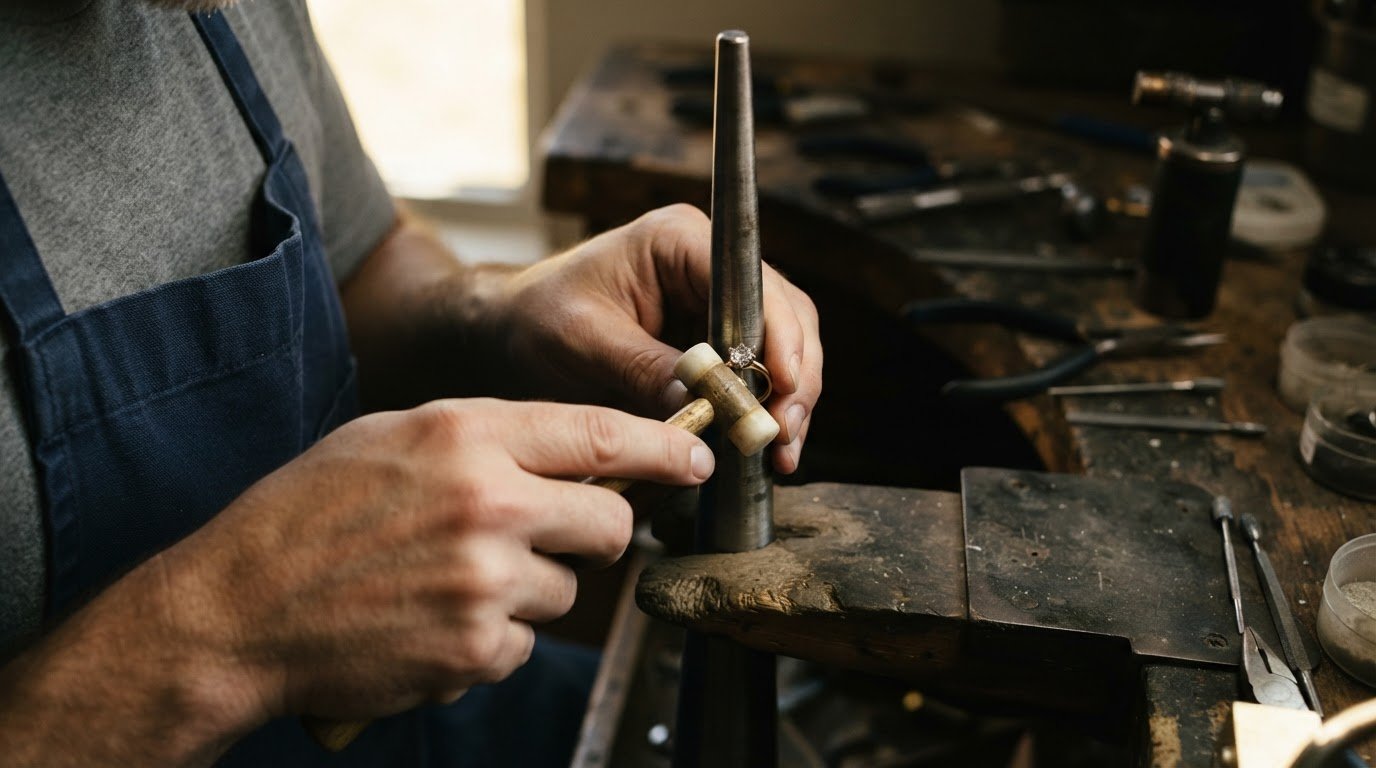
Redesigning changes more than appearance. A jeweler can reconsider the setting, proportions, ring size, metal color, and everyday wearability. An inherited engagement ring might keep its center diamond while receiving a more personal setting. You can preserve the original mounting separately, retire it, or have it melted down, so consider whether its original form also holds meaning.
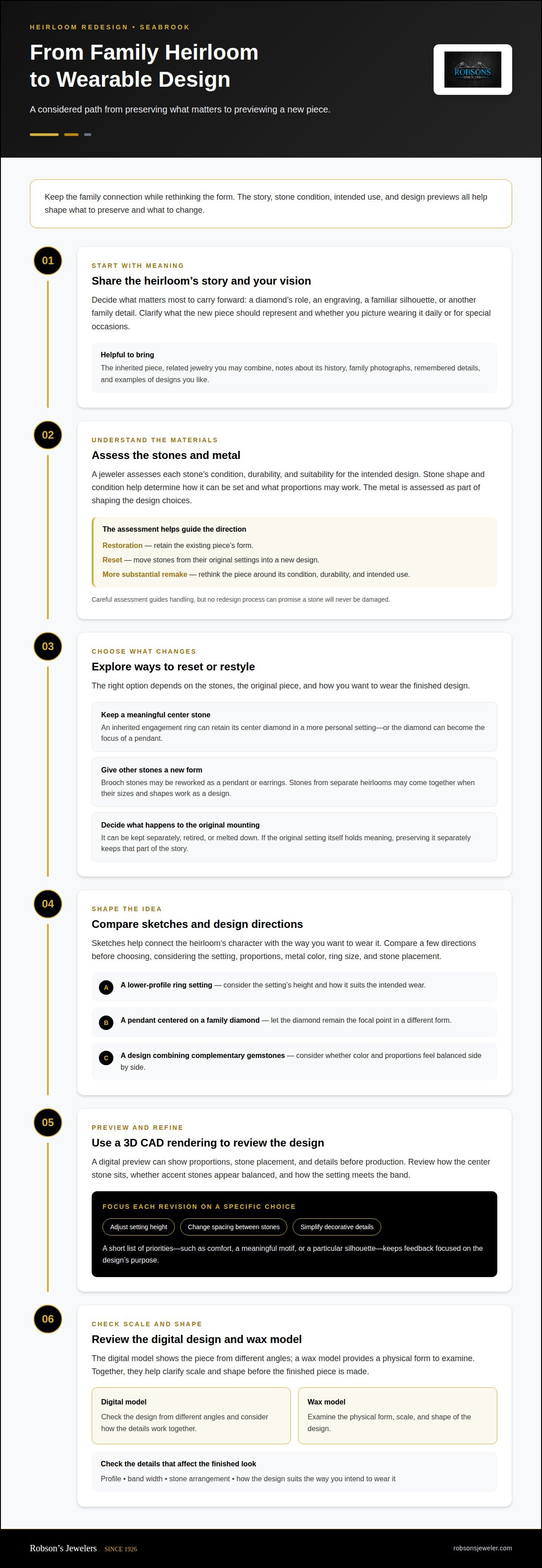
The process begins with a conversation about the piece’s history and your vision. The stones and metal are then assessed, and design choices are shaped around their condition, durability, and intended use. This helps determine whether restoration, a reset, or a more substantial remake best suits the heirloom.
Bring the inherited piece, any related jewelry you’re considering combining, and notes about its history. Family photographs, remembered details, and examples of designs you like can help communicate your preferences. Point out meaningful engravings or features, and say whether you imagine wearing the finished piece daily or saving it for special occasions.
For an heirloom diamond cluster ring, discuss how the stones’ arrangement relates to the original design and your preferred proportions. Clarifying what stays, what changes, and what the new piece should represent gives the design a personal direction while honoring its family history.
Sketching redesign ideas and exploring reset options
Sketches help turn a reset idea into a wearable design. Key choices include the setting, proportions, metal color, and how the stones will sit. For a redesign of inherited jewelry in Seabrook, these details connect the heirloom’s character with how you want to wear it.
Design options can preserve a family diamond, colored gemstones, engravings, or original metal while changing the piece’s form. An inherited ring might become a pendant or keep its center stone in a new setting.
Resetting Family Diamonds and Gemstones
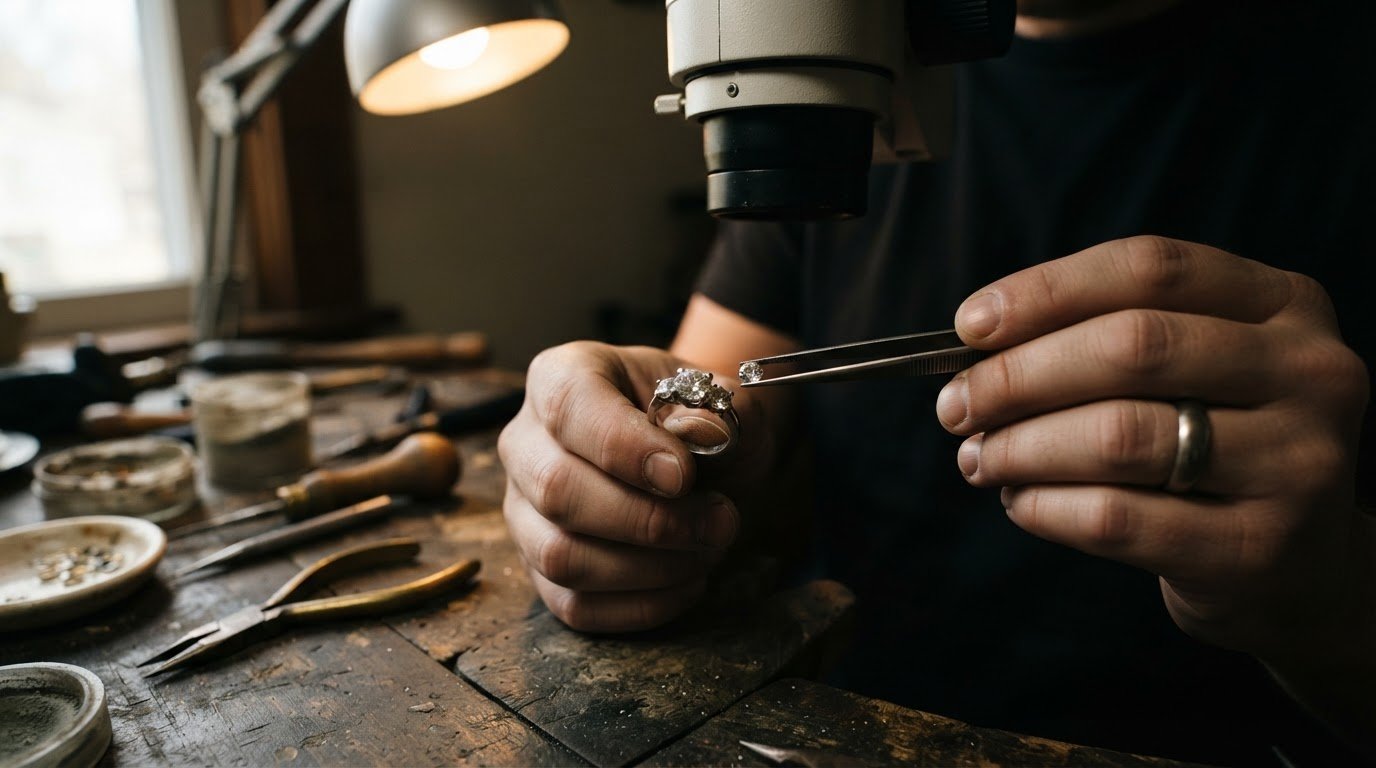
During a reset, stones are removed from their original settings and assessed for condition, durability, and suitability for the new design. That assessment helps determine whether a family diamond can anchor a ring or pendant, or whether smaller gemstones suit a different arrangement. Stone shape and condition influence the setting and proportions. Careful assessment guides handling, but no redesign process can promise a stone will never be damaged.
A new setting must balance the stone’s dimensions with the intended piece. A family diamond may remain the focal point while a new mounting changes its overall look. For inherited gemstones, the design needs to account for each stone’s condition and how it will be secured. These considerations help shape a design around the stones themselves, rather than forcing them into an unsuitable setting.
Preserving Gemstones and Sentimental Features
Keeping the original gemstones is one way to retain an heirloom’s connection while updating its style. A meaningful engraving can inform the new design or remain on part of the original piece if you keep it separately. If the original setting matters too, preserve it separately rather than incorporating it into the new jewelry.
Compare a few design directions before choosing one: a ring with a lower-profile setting, a pendant centered on the family diamond, or a piece combining complementary gemstones. Consider how the setting, ring size, metal color, and intended wear fit your needs. For redesigning inherited jewelry in Seabrook, those choices help make the finished piece both personal and practical.
For a tailored design conversation, explore custom jewelry design.
Using customer inspiration to develop a new design
Personal inspiration helps translate an heirloom’s meaning into design choices. A sketch or digital preview can show how those choices work together before the piece is made.
Bring a clear idea of the piece’s purpose, such as an everyday ring or a pendant for special occasions. A custom heirloom design can also carry several family stories forward. For example, one inherited ring might inspire rings for family members.
CAD Renderings and Design Revisions
A 3D CAD rendering can preview a design before production, including proportions, stone placement, and details. Review how the center stone sits, whether accent stones appear balanced, and how the setting meets the band. Revisions can refine those elements, helping the design reflect your preferences while accounting for the heirloom stones’ dimensions.
Use each revision to resolve a specific choice. You might adjust a setting’s height, change the spacing between stones, or simplify decorative details. A short list of priorities, such as comfort, a meaningful motif, or a particular silhouette, keeps feedback focused and connects the design to its original inspiration.
3D Designs and Wax Models
A digital model shows the piece from different angles, while a wax model provides a physical form to examine. Together, they help clarify scale and shape before the finished piece is made. Check whether the profile, band width, and stone arrangement match your intended look, especially for a ring you plan to wear often.
For a custom heirloom design, use the model to consider how details work together, not just how they look individually. A raised setting may emphasize a center diamond, while a lower profile creates a different visual balance. The model makes these tradeoffs easier to discuss before approval.
Final Design Approval and Estimate
Before approving the design, review the rendering or model against your agreed priorities. Confirm the stone placement, proportions, metal choice, and any details carried over from the heirloom. An estimate should reflect the approved design and work involved, including setting changes and any additional materials.
Request revisions before approval if an essential detail remains unresolved. Changes to stone selection, design complexity, or materials can affect the estimate. Once the design and estimate align with your decisions, approval sets the production plan and gives the heirloom’s new form a clear direction.
Reasons to redesign inherited jewelry
Redesign can preserve an heirloom’s meaning while making it more wearable. A new setting may retain its gemstones, provenance, engravings, and sentimental significance while changing the original form. Sometimes, original gold or platinum can also become part of the redesigned piece. Decide which parts carry the strongest family meaning and which changes address a practical need.
Consider redesign when a piece sits unworn because its shape or setting doesn’t suit you. A ring that feels impractical might become a pendant, while a worn or damaged setting may need attention before regular wear. Redesign can also make separate family pieces easier to wear together. The principle is simple: preserve what matters and reshape what keeps the heirloom from fitting your life.
For inherited jewelry in the Seabrook area, look for a jeweler who offers custom design and jewelry repair. Those skills support a conversation about the original piece, its materials, and possible changes. A suitable specialist can assess the jewelry and explain how its stones, metal, and construction relate to your design goals. Explore custom jewelry design as a next step.
Before redesign, arrange an appraisal documenting the heirloom’s current condition. Include descriptions of its gemstones, metal, identifying details, and engravings. Keep photographs with the appraisal record. This creates a reference for the original piece before its setting or form changes.
For insurance, share the appraisal documentation with your insurer and ask how it should be recorded for your policy. After redesign, update the record to describe the finished jewelry, since its materials and configuration may differ from the original. Keep both sets of documentation: the first captures family history and condition, while the updated record describes the new piece. This helps preserve information as the heirloom enters its next chapter.
Robson's Jewelers
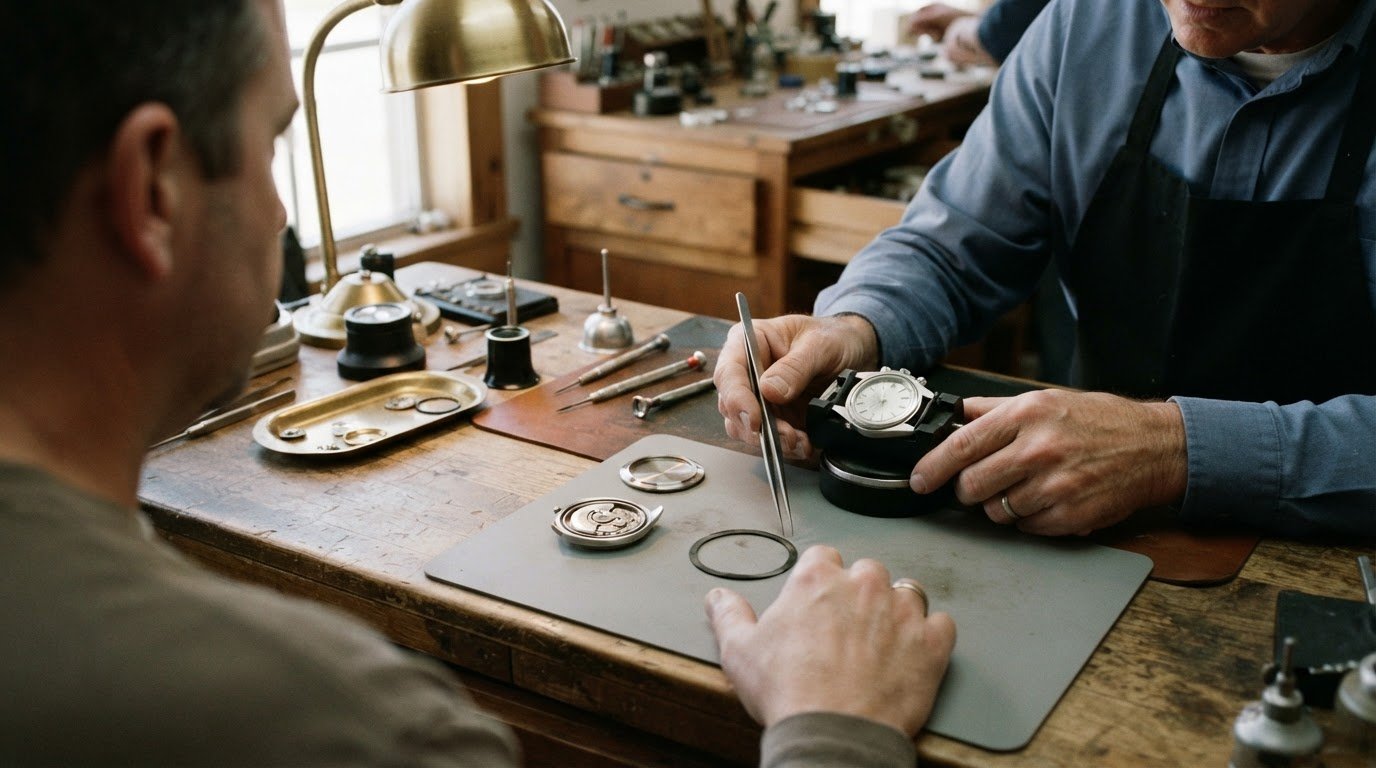
Robson's Jewelers helps reimagine inherited pieces thoughtfully. Its custom jewelry design and jewelry repair services are a natural next step when you’re considering a new design, preserving meaningful details, or addressing an heirloom’s condition.
Bring the heirloom and share what you hope to retain, such as a family gemstone, engraving, or familiar silhouette. A conversation about the piece and your preferences can clarify design possibilities and whether repair or a more substantial redesign better suits your goals. The aim is a considered path from inherited jewelry to a piece that feels personal to wear.
For help exploring your heirloom’s next chapter, contact Robson's Jewelers.
Give your heirloom a future that feels like yours
The next step is deciding what you want the piece to mean in its next chapter. Keep a particular stone, engraving, or family detail at the center of your vision, then consider how its new form can fit your life. A thoughtful redesign of inherited jewelry in Seabrook can honor the original story while making room for your own.
Robson's Jewelers offers custom jewelry design and jewelry repair to help you consider both a new direction and the condition of an heirloom. If you inherited an engagement ring, its story can inspire a personal redesign rather than requiring it to remain unchanged. Bring your ideas and the jewelry to Robson's Jewelers in Baytown, and take the next step at a pace that feels right.
Contact Robson's Jewelers to discuss your redesign. Your heirloom’s next chapter can begin with a design that carries its meaning forward.
Frequently Asked Questions
Why transform inherited jewelry?
Redesign inherited jewelry to suit the way you live and wear jewelry now. If a ring’s shape means you save it for rare occasions, a new form could make it more comfortable for regular wear while retaining its family connection. Ask whether a thoughtful change would help you enjoy the piece more often.
How much does it cost to redesign inherited jewelry in Seabrook?
Redesign costs depend on the work involved, so no single price applies to every piece. A simple setting change differs from a custom design that alters the structure or uses additional materials. Stone condition, metal choices, and design details also affect the project. A clear estimate should reflect the specific design and work planned for your heirloom.
How long does custom jewelry redesign typically take?
Most heirloom jewelry redesigns take about 4 to 6 weeks, depending on the project. The timeline can be affected by the design’s complexity, the setting work, and the steps needed to prepare the stones for their new piece. A straightforward reset and a more detailed custom design involve different work, so consider the project scope when planning for a particular occasion.
Comments