


Replace a Missing Side Stone in Your Ring in La Porte

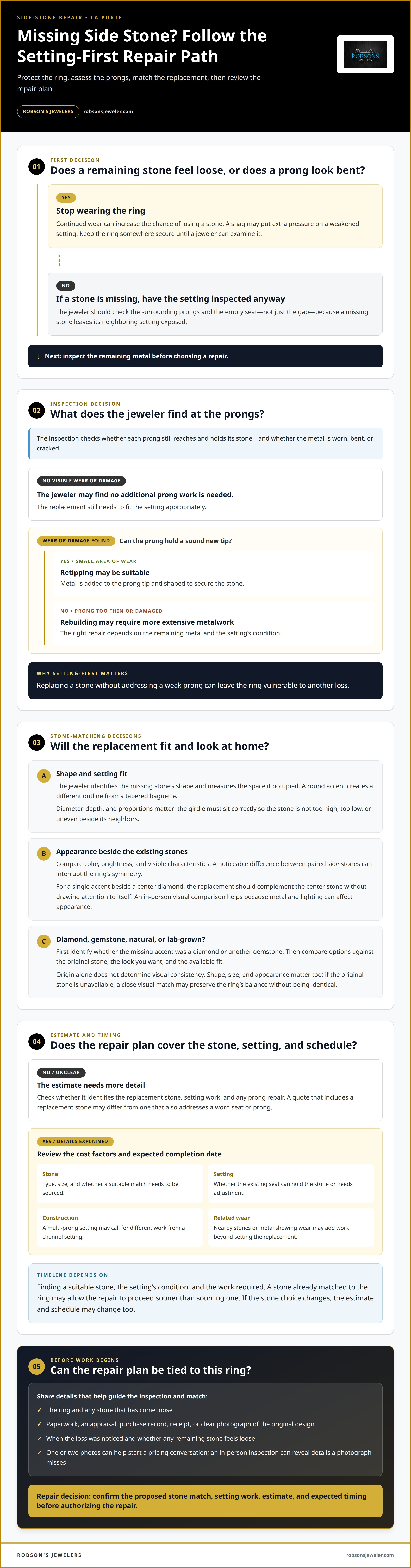
A missing side stone is also a reason to have the setting inspected. To replace a missing side stone in a ring in La Porte, a jeweler assesses the prongs and setting, then matches a replacement stone to the ring. If a remaining stone feels loose, stop wearing the ring until it can be examined, since continued wear can increase the chance of losing it.
It’s natural to focus on restoring the ring’s appearance, especially when its design or meaning matters to you. The repair should also address the setting so the replacement can be fitted appropriately.
Learn how worn or bent prongs can contribute to stone loss, what a jeweler considers when matching a side stone, and which details shape the estimate and timeline. You’ll also see what to expect when a professional examines the ring and explains the repair before work begins.
Table of Contents
Worn prongs and stone-loss risk
Stop wearing a ring if a side stone feels loose or a prong looks bent. Continued wear can increase the chance of losing a stone, while a snag may put extra pressure on a weakened setting. Keep the ring somewhere secure until a jeweler can examine it. A missing stone also leaves its neighboring setting exposed, so the inspection should include the surrounding prongs and empty seat, not just the gap.
During inspection, the jeweler checks whether each prong still reaches and holds its stone, and whether the metal is worn, bent, or cracked. A small area of wear may allow retipping: adding metal to a prong tip and shaping it to secure the stone. If the prong is too thin or damaged for a sound tip, rebuilding may require more extensive metalwork. The right repair depends on the remaining metal and the setting’s condition. Replacing a stone without addressing a weak prong can leave the ring vulnerable to another loss.
If comparing warranties or repair guarantees in La Porte, review the written terms for what work is covered, which parts are excluded, and how future setting damage is handled. Compare the scope and conditions, not just the word “guarantee.”
Which La Porte jewelers repair rings and replace side stones? Look for a jewelry repair service that assesses the setting as well as fits the replacement. A useful repair discussion explains whether prongs need retipping, rebuilding, or no additional work.
Bring the ring, any stone that has come loose, and paperwork or photographs showing its original design. A receipt or appraisal can help describe the ring, while a clear image may show how the missing accent stone matched its neighbors. Tell the jeweler when you noticed the loss and whether any remaining stone feels loose. Those details help guide the initial inspection and repair plan.
Diamond and accent-stone matching
A replacement should suit both the open setting and the ring’s existing stones. The jeweler first identifies the missing stone’s shape and measures the space that held it. A round accent, for example, won’t create the same outline as a tapered baguette. The stone’s diameter, depth, and proportions also matter because the girdle must sit correctly in the setting. A poor fit can leave the stone too high, too low, or uneven beside its neighbors.
Appearance matters as much as fit. The jeweler compares the replacement with nearby stones for color, brightness, and visible characteristics. In a pair of side stones, a noticeable difference can interrupt the ring’s symmetry. For a single accent beside a center diamond, the replacement should complement the center stone without drawing attention to itself. The metal setting and lighting can affect how a stone appears, so an in-person visual comparison helps guide the match.
Should you choose a natural or lab-grown replacement? The right choice depends on the original stone, the look you want, and the available fit. A jeweler can compare loose mined and lab-grown diamonds with the ring’s remaining stones, then explain how each option suits the design. Origin alone doesn’t determine whether a replacement will look consistent; shape, size, and appearance matter too.
Matching also depends on whether the missing accent was a diamond or another gemstone. The jeweler identifies the stone type before recommending a replacement, since a different material may vary in color, brilliance, or overall effect. If the original stone is unavailable, a close visual match may preserve the ring’s balance without being identical. Bring any appraisal, purchase record, or clear photograph showing the original setting. Those details can help narrow the search and support a considered choice.
Quote and timeline before work begins
A useful estimate connects the ring’s condition, replacement stone, and repair steps. Before approving work, review what the estimate includes and what may affect completion.
Reviewing the Quote and Timeline
The jeweler’s assessment should identify the replacement stone, setting work, and any prong repair needed. Ask how those parts affect the quoted total and expected completion date. La Porte customers can send one or two photos to request pricing before visiting the workshop. Images help start the conversation, while an in-person inspection can reveal details a photograph misses.
Read the estimate for the work described, not just its bottom line. For example, a quote that includes a replacement stone may differ from one that also addresses a worn seat or prong. The timeline should account for both bench work and sourcing a suitable stone. If the stone choice changes, the estimate and schedule may change too.
Factors That Affect Replacement Cost
Stone type, size, and setting all influence replacement cost. A diamond and a colored accent stone require different matching choices, while a larger stone may need a different fit than a smaller one. A jeweler also considers whether the existing seat can hold the replacement or needs adjustment. These details shape both material selection and labor.
The ring’s construction matters. A stone held by several prongs may need different work from one secured in a channel. If nearby stones or metal show wear, the repair may involve more than setting a replacement. The estimate should make clear how the stone, setting, and any related work contribute to the proposed repair.
For a precise decision, have the ring assessed and discuss the estimate before authorizing the repair. Share a clear photo and any available record of the original stone, then review the proposed match and timing together. This connects the quote to the ring’s actual condition rather than treating every missing side stone as the same repair.
Typical turnaround and parts sourcing
Completion depends on the stone match, setting condition, and work required. After assessing those details, the jeweler can outline the expected schedule.
Repair Turnaround
The timeline includes finding a suitable stone and completing the setting work. A replacement already matched to the ring may allow the repair to proceed sooner than a stone that needs sourcing. Prong rebuilding or seat adjustments can add bench work. Ask which steps are included in the estimate and what could change the expected completion date.
A straightforward fit differs from a repair that also needs damaged metal addressed. The jeweler can explain whether sourcing or additional setting work is the main scheduling factor. Agree on the expected timeline before authorizing the repair, so the estimate and completion plan reflect the same scope.
Replacement Parts Sourcing
Stone sourcing begins with the shape, dimensions, and type required by the empty setting. The jeweler compares candidates with the remaining accents, considering their proportions and appearance. A close match must also fit the seat; choosing by appearance alone can overlook the setting’s measurements.
If the ring’s original design or records identify the stone, that information can guide the search. Otherwise, the existing stones and setting provide reference points. A distinctive shape or less common accent may take longer to source than a readily matched stone. The jeweler should explain how the selected option fits the ring and whether sourcing changes the repair schedule.
Before approving the work, review the proposed stone and ask how it will sit beside the neighboring accents. Confirm that the estimate describes any needed setting adjustments, not only the sourced stone. If sourcing takes longer, the jeweler can update the expected completion date before proceeding. This keeps the repair scope and timing clear.
Discuss your ring repair timeline and the steps involved in sourcing its replacement stone.
Robson's Jewelers: Engagement Rings
Robson’s Jewelers provides jewelry repair for rings with missing side stones, including engagement rings that need careful attention to their settings. Bring the ring to the Baytown showroom for an assessment of the empty seat, remaining stones, and prongs. This frames the repair conversation around the ring’s actual condition and the match its design needs.
If the replacement choice involves a diamond, Robson’s Jewelers also offers loose mined and lab-grown diamonds. The right option depends on how the stone fits and complements the ring’s existing details. For a treasured engagement ring or another meaningful piece, a professional review can clarify the next repair steps.
Contact Robson's Jewelers to discuss your ring and its repair.
Choose the Next Chapter for Your Ring
A repair can honor a ring’s history while helping it feel like yours today. Before moving forward, consider what matters most: preserving its original character, maintaining a meaningful family connection, or choosing a detail that feels more personal. Those priorities can guide a thoughtful conversation and keep the decision centered on the piece, rather than on a quick fix.
If you’re considering how to replace a missing side stone in a ring in La Porte, take the next step when you’re ready to talk through your goals for the ring. A clear conversation can help you feel grounded in your choice and comfortable with the direction you take. Contact Robson's Jewelers about your ring, and give a meaningful piece a considered path forward.
Frequently Asked Questions
How much does it cost to replace a missing ring side stone in La Porte?
To replace a missing side stone in a ring in La Porte, cost depends on the replacement stone and the work the ring needs. A diamond, colored accent, or unusually shaped stone can call for different sourcing, while the setting’s condition may add repair work. Share clear photos and have the ring examined for a useful estimate. The quote should describe the proposed stone and setting work.
Can a jeweler match a missing side stone to the ring's existing stones?
Yes, a jeweler can look for a replacement that complements the stones already in the ring. For example, if one side stone is missing from a pair, the remaining stone helps show the intended shape and visual balance. A photo of the ring before the loss can offer another reference. The jeweler can explain how closely the available match fits the original design.
How long does side stone replacement take at La Porte jewelry stores?
Turnaround depends on the repair needed and how quickly a suitable stone can be sourced. Replacing a missing side stone in a ring in La Porte follows a different schedule if the setting also needs repair. One or two photos can help start a pricing conversation before a visit, while the ring’s condition and stone choice inform the repair timeline.
Could a missing side stone indicate damage to the ring setting or prongs?
Yes, stone loss can accompany worn, bent, or damaged prongs, so the setting deserves attention too. For example, a prong that no longer reaches the stone may fail to hold it securely. A jeweler can inspect the empty seat and nearby settings for wear or damage. If another stone feels loose, avoid wearing the ring until it has been assessed.
Comments