


Jewelry Cleaning and Inspection: How to Protect Your Favorite Pieces
Updated: Oct 20
A clean, sparkling piece can still hide a loose stone or a worn prong. Jewelry cleaning and inspection do different, equally important jobs: cleaning lifts away dirt and oils, while inspection looks for signs of wear that could put a favorite piece at risk.
If a piece looks dull, it can be hard to tell whether it needs cleaning or whether something has changed in the setting. With sentimental jewelry, using the wrong method can also cause harm. A thoughtful routine can help: know what cleaning can address, watch for changes, and pause before trying a method if you’re unsure of the materials or condition.
In this guide, you’ll learn how cleaning and inspection work together, which changes deserve a closer look, and why gemstones and metals may need different care. You’ll also find practical steps for protecting valuable and family pieces at home, plus guidance on when jewelry repair may help address wear. Robson’s Jewelers is a family-owned jeweler in Baytown, serving customers from Mont Belvieu, Seabrook, La Porte, and Dayton as well.
Table of Contents
Jewelry Cleaning and Inspection: Two Different Ways to Care for a Piece
Cleaning and inspection may happen as part of the same care routine, but they answer different questions. Cleaning asks, “What’s dulling the surface?” Inspection asks, “Is anything worn, loose, or damaged?” Keeping those purposes separate matters: a piece can look bright after cleaning and still have a setting that needs attention.
Jewelry cleaning removes surface buildup to refresh a piece’s appearance; jewelry inspection assesses its condition for signs of wear or damage. This distinction is especially useful for rings, bracelets, and other jewelry worn often, since everyday contact can leave residue or contribute to wear. It also matters for sentimental pieces kept for special occasions. An heirloom may spend much of its time stored away, but that doesn’t tell you whether its components are in good condition.
Think of care as having two goals: enjoy the way your jewelry looks and stay aware of how well it’s holding together. Neither goal replaces the other. A clean surface can make details easier to see, but sparkle isn’t evidence that a stone is secure. An inspection, in turn, is about condition rather than a cosmetic refresh. Understanding the difference is the foundation of thoughtful jewelry cleaning and inspection.
What professional jewelry cleaning is meant to address
Skin oils, lotion, dust, and other everyday residue can collect on a piece and soften its shine. Professional cleaning is intended to remove that buildup using an approach suited to the jewelry. As explained in the reference on Jewelry Cleaning, methods and risks vary, so one technique shouldn’t be assumed safe for every material or gemstone.
Cleaning addresses surface appearance, not structural problems. It isn’t the same as repair, which deals with a damaged or worn component, or polishing and restoration, which may alter a finish or address deeper wear. If a piece remains dull, looks changed, or raises concern after cleaning, it may need a closer assessment rather than a more aggressive cleaning method.
What a jewelry inspection can reveal
An inspection is a closer assessment of the stones, settings, and visible parts of a piece. It may reveal signs of wear or damage that aren’t obvious at a glance, helping identify a concern before continued use adds stress. That information can help determine whether repair is appropriate, though an inspection can’t promise that future damage will be prevented.
A visual check at home can help you notice a change, but it isn’t a substitute for a jeweler’s assessment. Don’t tug at a stone or bend a setting to test it. If something looks different or makes you uneasy, set the piece aside and have its condition assessed before wearing it again.
What to Look for During a Jewelry Inspection
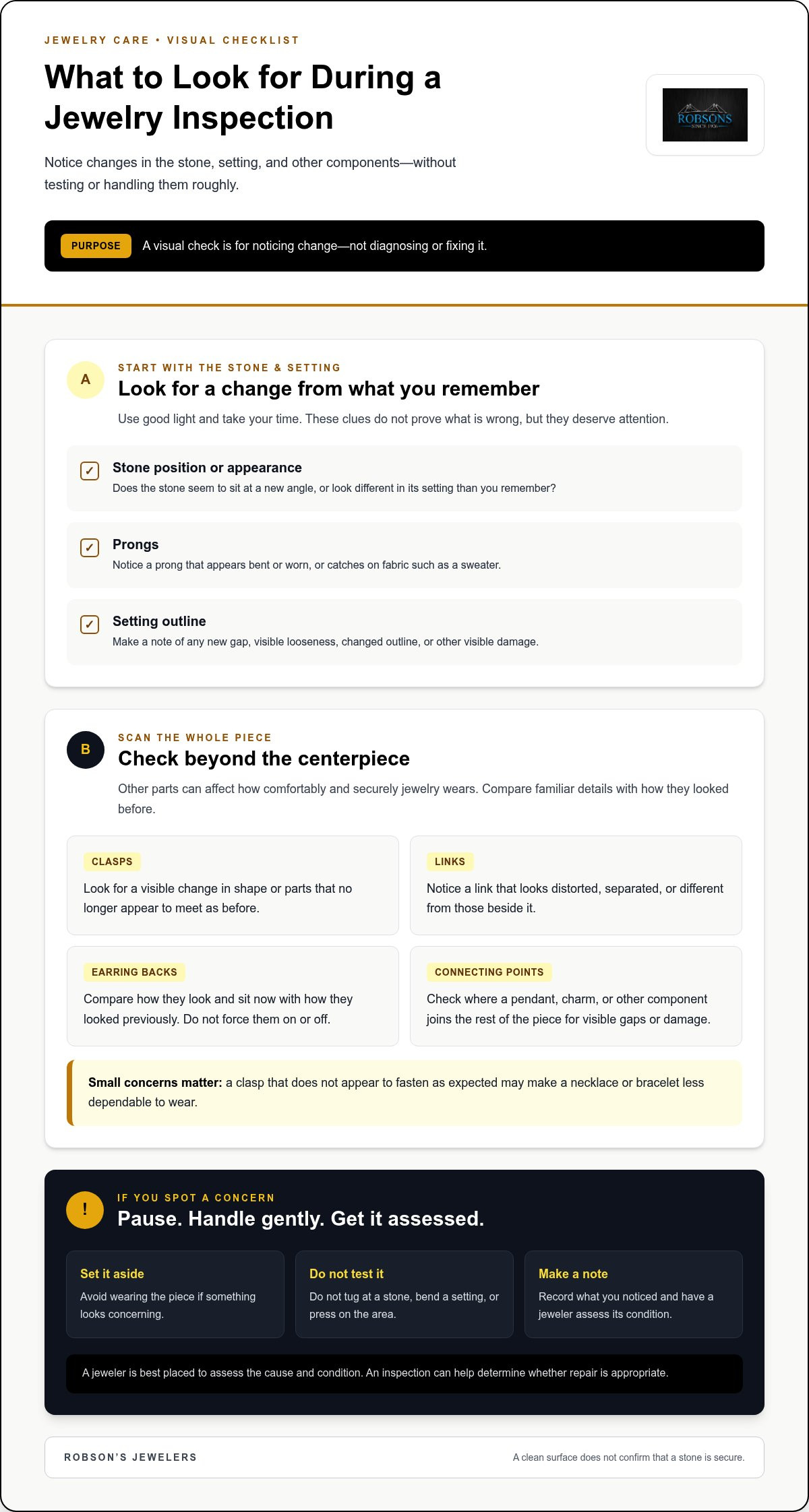
A useful visual check is about noticing change, not trying to diagnose or fix it. Look at a piece in good light and compare it with what you remember: does a stone sit differently, does a prong catch on fabric, or does a clasp appear changed? These clues don’t prove what’s wrong, but they can help you decide when to stop wearing a piece and seek a closer assessment.
A stone that appears to move, a bent or worn prong, a changed setting, or visible damage are all signs that deserve professional attention. Don’t tug, bend, or press a setting to test it. If you notice a concern, handle the piece gently and make a note of what you saw.
Signs a stone or setting may need attention
Notice whether a stone seems to sit at a new angle or looks different in its setting than you remember. A prong that appears bent or worn, or catches on a sweater, can also be a reason to pause before wearing the piece again. A new gap, visible looseness, or a changed outline is worth noting, but a jeweler is best placed to assess its cause and condition.
These changes can be subtle on a ring worn every day. Familiarity may make small differences easy to miss, so take your time rather than relying on a quick glance. For broader care guidance, the Gemological Institute of America’s GIA Jewelry Care Tips offers advice on caring for different types of jewelry.
Check the whole piece, not only its centerpiece
A stone may draw the eye, but other parts affect how comfortably and securely jewelry wears. Include these areas in a gentle visual scan:
Clasps: Look for visible changes in shape or parts that no longer appear to meet as they did before.
Links: Notice any link that looks distorted, separated, or different from those beside it.
Earring backs: Compare them with how they looked and sat previously, without forcing them on or off.
Connecting points: Check where a pendant, charm, or other component joins the rest of the piece for visible gaps or damage.
A small concern away from the centerpiece can still affect wearability. A clasp that doesn’t appear to fasten as expected, for example, may make a necklace or bracelet less dependable to wear. Comparing a familiar piece with how it looked and fastened before can help you describe a change clearly.
If you spot something concerning, set the piece aside rather than testing it through wear. A jeweler’s assessment can help determine whether repair is needed. Robson’s Jewelers provides jewelry repair in Baytown for pieces with personal or family significance.
At-Home Jewelry Care vs. Professional Cleaning and Inspection
Home care and professional attention serve different purposes. Gentle routine care can lift surface residue and keep a piece looking its best, while a jeweler can assess its condition and determine an appropriate cleaning approach. The right choice depends on the jewelry’s materials, construction, and condition, not just how dull it looks.
Use the care instructions for the specific piece whenever possible. If you don’t know what a gemstone is, the design is delicate, or you can see damage, pause before trying a cleaning method. An improvised approach may affect a material or finish, and cleaning at home can’t establish whether a setting is secure.
When gentle home care may be appropriate
For a piece whose care guidance you understand and that shows no visible damage, basic surface care may be suitable. Follow the instructions for that jewelry rather than applying the same technique to everything in your collection. Avoid harsh chemicals and abrasive materials, including toothpaste or baking soda, which can scratch softer metals or gems. Skip unverified methods, too. A piece may look brighter afterward, but its appearance alone doesn’t confirm its structural condition.
Routine care at homeSuitable task: Removing light surface residue when the piece’s care guidance supports the method.Limits: Can improve appearance, but can’t assess a setting or address damage.Seek a jeweler: If the material is unknown, the design is delicate, or anything looks damaged.
Professional attentionSuitable task: Assessing condition and choosing cleaning suited to the jewelry.Limits: The appropriate method depends on the piece, so no single approach fits every item.Seek a jeweler: For a loose-looking stone, visible wear or damage, or uncertainty about safe care.
When professional attention is the wiser choice
Don’t experiment if a stone appears loose, a component looks damaged, or you’re unsure what a piece is made of. Set it aside and have its condition assessed before cleaning or wearing it again. This is especially prudent for delicate designs and treasured pieces where a cautious approach matters more than a quick shine.
Professional cleaning isn’t one-size-fits-all. A jeweler can consider the materials and construction when deciding how to clean a piece; a method suitable for one item may not suit another. Cleaning and inspection also remain distinct: cleaning addresses buildup, while assessment considers the piece’s condition. Keeping the two tasks separate helps you make thoughtful care decisions without guessing at a risky home technique.
How to Build a Jewelry Cleaning and Inspection Routine
A useful routine doesn’t need a rigid calendar. Match care to the piece: jewelry worn daily or during hands-on activities may need closer, more frequent attention than an item brought out occasionally. Inspection timing depends on how often and where a piece is worn, its condition, and whether you notice a change. If something looks different, respond then rather than waiting for a scheduled check.
A practical routine between professional visits
Keep the steps simple: observe, avoid risky handling, record concerns, and seek appropriate care. This turns jewelry cleaning and inspection into a thoughtful habit instead of a guessing game.
Observe. Look for changes in fit, fastening, appearance, or how a stone sits. Check the whole piece in good light.
Avoid risky handling. Don’t tug at settings, bend parts, or repeatedly test a clasp. Remove jewelry before activities that could expose it to impact or harsh substances.
Record concerns. Note what looks different and when you first noticed it. A brief note can help you explain the change later.
Seek appropriate care. Follow the care instructions for the specific piece. If there’s visible damage or uncertainty about safe cleaning, pause home care and arrange a jeweler’s assessment.
Storage helps, too. Keep pieces separated to reduce tangling and contact with one another. Chains stored together can become tangled, and pieces rubbing against each other may risk contact damage. Whether organizing fine heirlooms or everyday pieces and accents from retailers like Frenelle Jewellery, consult a jewelry maintenance and cleaning guide and follow guidance suited to the specific materials in your collection.
Prepare for a jewelry-care visit
A little context makes it easier to explain what you’ve noticed. Identify the piece, describe the change, and mention when it first caught your attention. If you have care instructions or appraisal records for it, bring them along when available. Don’t try to reproduce a problem by pulling on a stone or forcing a clasp. Simply share what you observed.
If the concern involves a stone that looks loose, visible damage, or a part that no longer fastens as expected, set the piece aside until it can be assessed. A jeweler can determine whether repair is appropriate and recommend care suited to the piece. For concerns that call for professional jewelry repair in Baytown, Robson’s Jewelers offers a hands-on next step for treasured pieces. Note what changed, then arrange care with confidence.
Find Thoughtful Jewelry Care in Baytown with Robson’s Jewelers
Jewelry can hold a story as precious as its materials: a ring marking a milestone, a pendant passed down through a family, or a bracelet tied to a particular chapter of life. Caring for these pieces thoughtfully means paying attention to both how they look and how they’re holding up, so they can continue to be worn and treasured.
Robson’s Jewelers is a family-owned Baytown jeweler with roots dating to 1926. Its services include jewelry and watch repair, pearl restringing, and certified appraisals. For customers in Baytown and nearby communities, including Mont Belvieu, Seabrook, La Porte, and Dayton, these services offer practical support for valued pieces.
Care for pieces with a story
A family heirloom may be worn often, while another meaningful piece may spend most of its time safely put away. Either way, changes in appearance or condition deserve thoughtful attention. Gentle care suited to the piece, along with professional assessment when concerns arise, can help you make informed decisions about continued wear and upkeep. The same principle applies to high-end watches; guidance from luxury timepiece specialists like Luxury Time NYC highlights how routine checks and proper handling protect both condition and investment value. There’s no need to panic over a change; take note and choose a careful next step.
Take the next step with a local jeweler
If you’ve noticed a change that may call for repair, Robson’s Jewelers provides jewelry repair to help address wear or damage. Certified appraisals serve a different purpose: they provide a formal assessment of a piece’s value and shouldn’t be confused with checking whether a setting is secure. The right service depends on whether you need repair or a valuation.
For a piece that needs attention, describe what you’ve noticed and share any details about its history or past care. That context can help explain the concern, whether it involves visible wear or you’re seeking an appraisal. Robson’s Jewelers serves Baytown and nearby communities, including Mont Belvieu, Seabrook, La Porte, and Dayton.
Thoughtful jewelry cleaning and inspection is not about treating every piece the same. It’s about respecting its materials, noticing changes, and getting appropriate help when needed. If a favorite piece has you wondering what care makes sense, Robson’s Jewelers offers jewelry repair, watch repair, pearl restringing, and certified appraisals.
Give Your Favorite Pieces a Thoughtful Next Step
The best time to make a care plan is before a small question becomes a reason to stop wearing a piece you love. Choose one meaningful item to begin with. Consider how it fits into your life, what care guidance came with it, and whether anything about its appearance or condition has changed. That simple pause can help you decide whether gentle routine care is enough or whether a jeweler’s perspective would be useful.
Jewelry cleaning and inspection are part of a longer relationship with the pieces you wear, celebrate, and pass down. A local jeweler can help you consider what care makes sense for a particular item and whether repair or a certified appraisal is the right next step. Robson’s Jewelers welcomes jewelry owners from Baytown, Mont Belvieu, Seabrook, La Porte, and Dayton.
Explore jewelry repair, appraisals, and other services at Robson’s Jewelers, and take the next step toward caring for your treasured pieces.
Frequently Asked Questions
How often should jewelry be professionally cleaned and inspected?
There isn’t one schedule that fits every piece. A ring worn daily has a different pattern of exposure than a necklace saved for special occasions, so consider how often and in what settings you wear each item. A change in fit, fastening, or appearance is a reason to arrange an assessment sooner rather than waiting for a routine visit. Keep care notes with your jewelry records to spot recurring concerns.
Can I clean my jewelry at home between professional visits?
Yes, if the care instructions for that particular piece support the method you plan to use. Avoid applying a familiar routine to a piece with an unknown gemstone or delicate construction. Harsh chemicals and abrasive tools can affect some materials or finishes. Home cleaning is for surface residue, not checking whether a setting is secure. If you’re uncertain about the material, wait until you can get guidance specific to the item.
Is ultrasonic cleaning safe for every piece of jewelry?
No. An ultrasonic cleaner isn’t suitable for every gemstone or design. Pearls, opals, and emeralds can be vulnerable to this type of cleaning, and a treated stone or compromised setting may also require special care. The piece’s materials and condition matter more than whether it looks sturdy. Don’t place an unfamiliar item in an ultrasonic cleaner based on appearance alone; follow its care instructions or have a jeweler assess it first.
What happens during a jewelry inspection?
A jeweler examines the piece for visible wear or damage, looking at areas such as the setting, stones, prongs, clasp, and connecting parts. The assessment is guided by the item’s design, so a gemstone ring and a linked bracelet may call for attention to different components. If you’re bringing in a concern, describe what you noticed and when. The jeweler can explain whether repair or another form of care may be appropriate.
How can I tell if a diamond is loose in its setting?
A diamond that seems to shift position, sits at a new angle, or makes a sound during ordinary movement may need professional attention. Don’t push or pull the stone to see if it moves. If you’re concerned, stop wearing the ring and store it separately in a secure place so it won’t be knocked or caught on other items. A jeweler can assess the setting and advise whether repair is needed.
Does professional jewelry cleaning remove scratches?
Not necessarily. Cleaning targets residue on a piece, while a scratch is a change to its surface. Whether the mark can be addressed depends on the metal, finish, and design, and treatment may differ from cleaning. Avoid trying to buff it with household products or an abrasive cloth, which could alter the finish. If the mark remains after the piece is clean, a jeweler can help determine whether it’s a scratch or another surface change.
Should I stop wearing jewelry if a prong catches on clothing?
Yes, set the piece aside until a jeweler can assess it. A catching prong may have changed shape or become worn, but you can’t determine the cause by feel alone. Don’t press it back into place or keep wearing the jewelry to see whether the snag happens again. Robson’s Jewelers provides jewelry repair for customers in Baytown and nearby communities, including Mont Belvieu, Seabrook, La Porte, and Dayton.