


Princess Cut Diamonds in La Porte: Natural and Lab Grown

The most memorable princess cut isn’t automatically the natural one or the lab-grown one; it’s the diamond whose look and qualities feel right to you. For princess cut diamonds in La Porte, either origin can suit an engagement ring, so compare the stone itself as well as how it was created. The square shape’s brilliance comes from its faceting, and princess cuts are described as having 76 brilliant facets.
When comparing princess cut diamonds in La Porte, natural versus lab-grown origin is only one part of the decision. Cut, color, clarity, carat, outline, and light performance all shape a diamond’s appearance.
Learn how natural and lab-grown princess cuts compare and what to examine in each. The four Cs work together, while the princess cut’s square shape affects its sparkle. Use these details to narrow your options with confidence.
Table of Contents
Should I Choose a Natural or Lab-Grown Princess Cut?
Choose by origin, then judge each diamond on its own qualities. Natural diamonds form underground; lab-grown diamonds are created in controlled settings. Both can have a square outline, but their origins and personal significance differ. Choose an engagement ring based on the qualities that matter most to you.
A London diamond cutter created the princess cut in 1961; it was also called the profile cut. Its angular outline brings a modern character to solitaire, halo, and three-stone settings. Compare natural and lab-grown diamonds by the same visible qualities, not origin alone.
Lab-grown princess-cut engagement ring styles range from clean solitaires to halo and three-stone designs. Listed solitaire examples span 1-4 carats total weight, while a three-stone style spans 1 1/2-4 1/2 carats total weight. Hidden-halo styles also appear across a range, including 1 1/2-4 5/8 carats total weight. These examples show how setting design shapes a ring’s presence.
Set your total ring budget first, then compare diamonds with similar cut, color, clarity, and carat characteristics. Lab-grown origin can allow a different balance of size and quality within a budget. The setting and design also affect the overall cost, so compare complete rings rather than carat weight alone.
Yes. Custom jewelry design can bring a princess-cut engagement ring together around a selected loose mined or lab-grown diamond and a setting that suits it.
A certified appraisal is different from a diamond grading report or store warranty. Appraisal and warranty terms vary by store.
Return and resizing policies vary by jeweler, and there is no single La Porte-wide policy. Review the terms before buying, particularly for a custom ring.
Online sellers may ship princess cut diamonds to La Porte. Before ordering, compare grading documentation, setting details, and the seller’s stated return and resizing terms.
Diamond cut, color, clarity, and carat
Compare the four Cs together, since one quality can balance another. With a princess cut, examine the diamond’s light performance, color, and clarity, and consider what its carat weight means for the finished ring.
Cut Quality
Cut quality describes how a diamond’s proportions, symmetry, and finish work together to reflect light. Look for an even, lively appearance across the center and facets rather than choosing by carat alone. View the stone from different angles: a princess cut’s square outline and pointed corners make symmetry especially noticeable. The setting matters as well, framing the diamond and helping protect its corners.
Color and Clarity
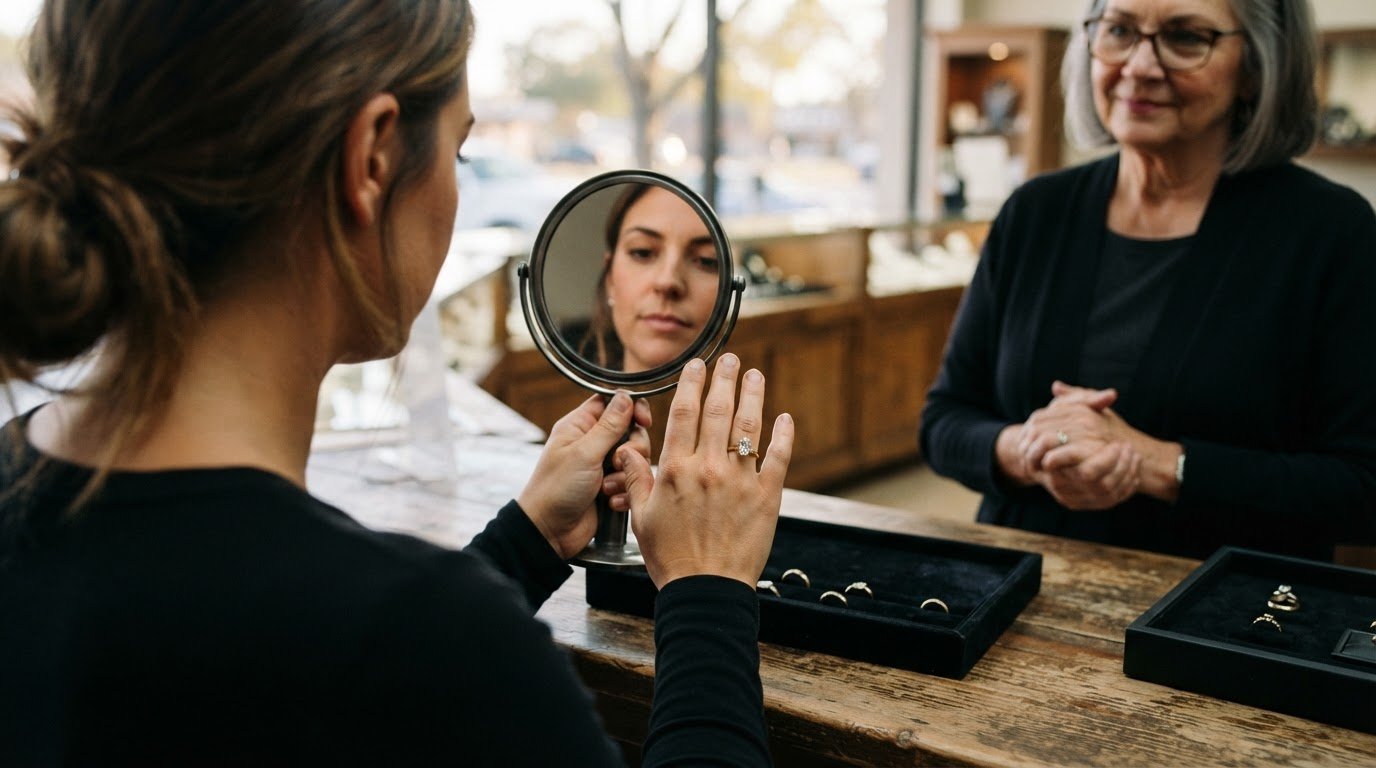
Color grades describe how colorless or warm a diamond appears. Compare stones side by side under the same lighting and decide whether you can see a difference. Clarity refers to internal inclusions and surface marks. Consider their position and visibility, not just the grade: an inclusion near the center may draw more attention than one near an edge. Compare stones with similar cut and carat before deciding which clarity level suits you.
Carat Weight
Carat measures diamond weight, not its face-up dimensions. Two princess cuts with the same carat weight can look different because their proportions and depth differ. Check the measurements and view each stone from above. A listed lab-grown ring example, Secret Kiss Bezel Set Hidden Halo, spans 1 1/5-4 1/3 carats total weight. Total weight includes the ring’s diamonds, not just its center stone.
Make a practical comparison: choose a preferred appearance, then weigh cut, color, clarity, and carat against your budget. A larger stone can draw the eye, while a brighter-looking stone may better match your priorities. Explore loose lab-grown diamond options as one way to compare stones before selecting a setting.
Princess-cut diamond shape and brilliance
A princess cut has a square or rectangular outline with crisp, pointed corners. It looks more angular than a round diamond. Cushion cuts have softened corners, while radiant cuts have clipped corners and may look square or elongated.
Princess-Cut Shape
View the outline from above: a balanced princess cut has even-looking sides and corners that align cleanly. Some stones look nearly square; others have a longer, rectangular profile. That difference affects how the diamond sits in a setting and complements the wearer’s hand. Compare the face-up outline before choosing a classic solitaire or a more detailed design.
Brilliance of the Princess Cut
Princess cuts are described as having 76 brilliant facets, which help create sparkle as light reflects through the stone. The facet pattern gives the center a lively appearance, while the square outline adds crisp flashes. Look at the diamond under different lighting and tilt it gently. Notice whether its brightness appears balanced across the center, rather than concentrated in one area.
For a useful comparison, view a princess cut beside round, cushion, and radiant diamonds of similar size. A round cut emphasizes a circular outline; a princess cut makes straight edges and corners part of its appeal. Cushion shapes look softer, while radiant cuts combine clipped corners with a brilliant-style appearance. These differences are clear even before you choose a setting.
Then consider how the setting frames the diamond. A solitaire leaves the princess-cut outline clearly visible, while surrounding stones add detail and change the overall look. Check how the corners sit within the setting, then view the ring from above and at an angle. This helps you assess shape, sparkle, and style together.
Current Princess Cut Diamond Prices in La Porte
Princess-cut diamond prices in La Porte depend on the individual stone and its setting, so compare complete specifications rather than carat alone. A 1-carat F SI2 EGL-certified loose diamond is one local comparison example. Its carat, color grade, clarity grade, and certification describe different aspects of the stone, and each can influence how a similar-looking option is valued.
Compare options consistently. First, distinguish loose-diamond prices from finished-ring prices, since a setting has its own design and material considerations. Then compare diamonds with similar carat, color, clarity, and cut characteristics. Check whether a ring quote covers only the center diamond or includes additional stones. Without those details, the options are not directly comparable.
The setting can change a ring’s total cost as much as the diamond choice. A solitaire focuses attention on one center stone, while a halo or three-stone design adds diamonds and visual detail. Metal, setting style, and the center stone’s characteristics all shape the final cost. Set a budget for the complete ring, then decide which features matter most.
When comparing princess cut diamonds in La Porte, ask for the diamond’s grading details and read the finished setting description. Check whether the carat weight refers to the center diamond or the total diamond weight. A ring’s stated total carat weight may include side stones, so the center diamond may weigh less. These details make price comparisons more useful.
Explore loose mined and lab-grown diamonds to compare stone options before choosing a setting. A clear side-by-side review of grading details, shape, and ring design helps you focus your budget on the features you value most.
Robson's Jewelers: Engagement Rings
Robson's Jewelers offers engagement rings, loose lab-grown diamonds, and custom jewelry design for shoppers choosing a princess-cut ring. Once you have narrowed your preferences, the team can help you consider how a selected diamond and setting work together. Compare a loose lab-grown diamond with ring designs, or discuss a custom piece shaped around the look you have in mind.
Bring your priorities to the conversation: the princess cut’s outline, your preferred balance of the four Cs, and whether you want a solitaire or a more detailed setting. These choices help focus the design on what matters to you. Robson's Jewelers also provides jewelry repair to help maintain pieces you already own.
Contact Robson's Jewelers or visit robsonsjeweler.com to explore your engagement ring options.
Choose a Ring That Feels Like Yours
Picture the ring as part of everyday life, not just as a diamond on display. Consider the styles you naturally reach for, how prominent you want the center stone to look, and whether a crisp square silhouette suits your taste. These personal details help make the choice distinctly yours.
As you compare princess cut diamonds in La Porte, keep your preferred look in mind. There is no need to follow a trend or choose the largest stone. The right ring is one you will be glad to wear and celebrate for years to come.
When you’re ready to talk through your ideas, contact Robson's Jewelers. Take the next step at your own pace, with a clear picture of the ring you hope to find.
Frequently Asked Questions
Do Princess Cuts Need Special Settings?
Princess cuts benefit from settings that protect their pointed corners. A V-shaped prong at each corner can help shield the points, while a bezel surrounds more of the stone’s edge. The setting also affects the ring’s appearance and maintenance needs. Compare how much of the diamond each design exposes, then choose a style that suits your daily wear.
What Color and Clarity Should I Choose for a Princess Cut?
Compare stones in person to choose the color and clarity differences you can see and value. Warm-toned metal can complement a diamond with a warmer appearance, while a bright white setting may make color differences more noticeable. For clarity, look for inclusions that catch your eye in ordinary viewing, not only under magnification. The right balance depends on the individual diamond and your preferences.
What Makes a Princess Cut Diamond Sparkle?
A princess cut’s sparkle depends on how its proportions and facets return light to the viewer. Two diamonds with the same shape can differ in brightness and contrast. Compare each face-up and at an angle, noticing whether dark areas interrupt its liveliness. Surface residue can dull the diamond’s appearance, so routine care helps preserve its look.
Where can I buy princess cut diamonds in La Porte?
Shoppers looking for princess cut diamonds La Porte can explore options at Robson's Jewelers in nearby Baytown, including engagement rings, loose mined and lab-grown diamonds, and custom jewelry design. Choose between a loose diamond and a finished ring, or develop a custom design around your selected stone. The store also serves Baytown, Mont Belvieu, Seabrook, La Porte, and Dayton.
Which jewelry stores near La Porte specialize in princess cut diamonds?
Robson's Jewelers in Baytown offers engagement rings and custom jewelry design for shoppers considering a princess-cut ring. Choose between loose mined and lab-grown diamonds as you decide on a stone. You can explore ring options or discuss a custom design suited to your plans. The showroom serves shoppers from La Porte, Mont Belvieu, Seabrook, and Dayton as well as Baytown.
How do princess cut diamond prices vary by carat, color, clarity, and cut?
Diamond prices reflect a combination of characteristics, including carat weight, color, clarity, and cut. A higher carat weight does not automatically mean a better-looking stone; visible color or inclusions may matter more to you. Compare diamonds with similar grading details, then check whether the quoted price covers a loose stone or a complete ring with its setting.
Comments