


Pearl Restringing in Baytown: Protect Your Timeless Strand

You reach for a treasured pearl strand and notice that the thread looks fuzzy, or the pearls no longer sit close together. It can be hard to know whether the necklace needs attention, but waiting until the thread breaks may put a meaningful piece at risk. If you’re looking for pearl restringing Baytown, Robson’s Jewelers is a local option. This family-owned Baytown store has served the community since 1926.
Before leaving your jewelry with a jeweler, ask what the assessment covers and what work may be recommended. The jeweler can examine the thread, pearls, and clasp to help determine whether restringing is appropriate. Before authorizing work, clarify the available thread and knotting options, whether clasp work is included, where the service is performed, and the estimated timing and price.
This guide explains signs that a strand may need restringing, what a professional service may involve, and how to prepare for an assessment. These practical steps can help you make a clear plan for caring for an heirloom or frequently worn strand, whether you’re in Baytown, Mont Belvieu, Seabrook, La Porte, or Dayton.
Table of Contents
Pearl Restringing in Baytown: When Does a Strand Need Professional Attention?
A pearl strand can hold family memories as well as precious materials, so signs of wear deserve attention. If you’re considering pearl restringing in Baytown, ask a jeweler to assess the strand rather than waiting for the thread to fail. An examination can help determine whether restringing or another step is appropriate. Visible changes are useful clues, not a diagnosis.
What visible changes suggest a pearl strand needs inspection?
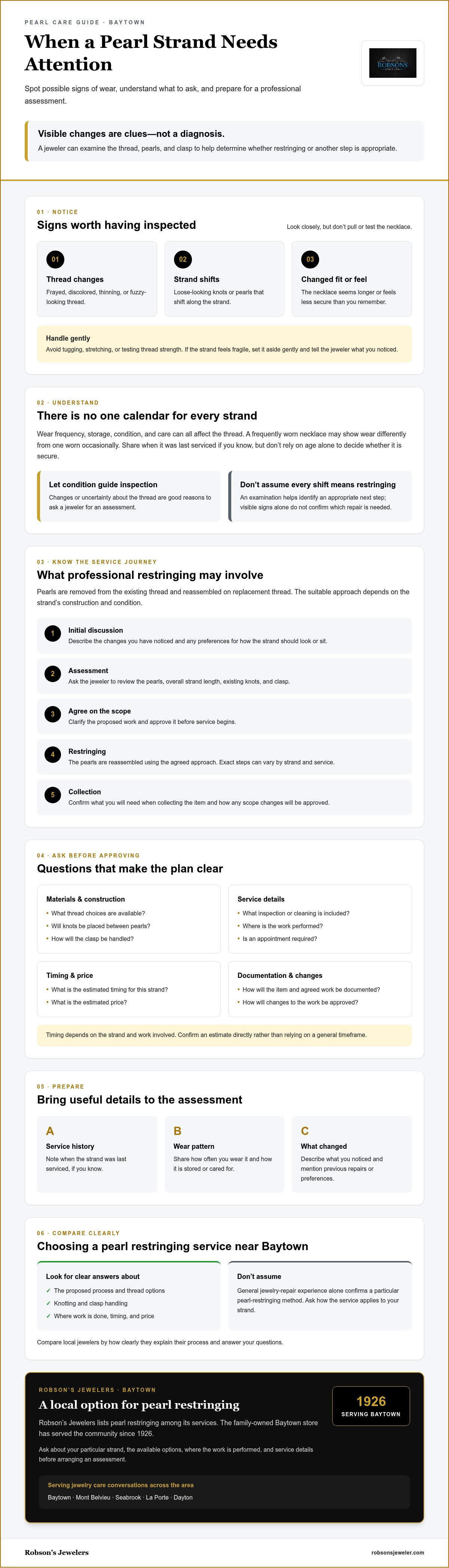
Look closely without pulling on the necklace. Frayed, discolored, or thinning thread, loose-looking knots, or pearls that shift along the strand are all reasons to ask a jeweler for an inspection. The necklace may also seem longer or feel less secure than you remember. These signs don’t confirm which repair is needed, but describing them can help start a useful assessment.
A strand that appears strained deserves particular care if it’s an heirloom or worn often. Avoid tugging, stretching, or testing the thread to see how strong it is. If it feels fragile, set it aside gently and tell the jeweler what you’ve noticed. The pearls’ material and construction can also inform careful handling. For background on how cultured pearls form, see cultured pearls.
How often should pearls be restrung?
There isn’t one calendar interval that suits every strand. How often it’s worn, how it’s stored, its condition, and the care it receives can all affect the thread. A necklace worn frequently may show wear differently from one brought out only occasionally. If you know when it was last serviced, share that information, but don’t rely on age alone to decide whether it’s secure.
Let the strand’s condition guide inspection, not a fixed restringing calendar. If you notice changes or feel unsure about the thread, ask a jeweler to assess it. Robson’s Jewelers lists pearl restringing among its services in Baytown. Contact the store to discuss your strand and confirm service details before arranging a visit. An assessment can help identify the next step without treating every loose-looking knot or shift as proof that restringing is necessary.
What Happens During Professional Pearl Restringing?
Leaving a treasured strand for service should start with a clear conversation. Pearl restringing involves removing pearls from their existing thread and reassembling them on replacement thread. The suitable approach depends on the strand’s construction and condition, so ask the jeweler to explain the proposed work before you approve it.
A typical service journey includes an initial discussion, an assessment, agreement on the scope of work, the restringing, and collection. The exact steps can vary. Ask about thread type, knotting, clasp handling, and whether inspection or cleaning is included rather than assuming these are part of the service. For background on pearl characteristics and value, the International Gem Society’s pearl guide offers helpful context about why a strand may deserve attentive care.
What should a jeweler assess before restringing a strand?
Describe what you’ve noticed and ask the jeweler to review the pearls, overall strand length, existing knots, and clasp. Mention previous repairs if you know about them, along with any preferences for how the strand should look or sit. These details help focus the discussion, although they don’t determine the method on their own.
Before work begins, ask what the proposed service includes. Confirm which thread choices are available, whether knots will be placed between pearls, how the clasp will be handled, and what inspection steps are included. These are details to clarify with the jeweler, not assumptions to make about a particular service.
What should you expect when you leave a strand for service?
Before handing over the necklace, ask how the item and agreed work will be documented, how you’ll approve any changes to the scope, and what you’ll need when collecting it. If an appointment may be required, confirm that before visiting. Ask how the estimated turnaround is determined. Timing depends on the strand and work involved, so confirm it directly rather than relying on a general estimate.
Robson’s Jewelers lists pearl restringing among its jewelry maintenance services. For pearl restringing in Baytown, contact the store to discuss your strand and confirm where the work is performed, what options are available, and how to arrange service. Clear answers help you decide whether to authorize the proposed work.
How to Choose a Pearl Restringing Service Near Baytown
A valued pearl strand deserves more than a general promise of careful jewelry repair. As you compare pearl restringing services in Baytown, look for clear explanations of who will assess the necklace, what work they recommend, and how you’ll approve it. A jeweler’s broader repair experience may be relevant, but it doesn’t tell you which restringing method they use or whether it suits your strand.
Use this checklist to guide the conversation:
Process clarity: Can the jeweler explain what the initial assessment covers and what the service may include?
Relevant experience: Who examines the strand, and what experience do they have with pearl restringing?
Careful handling: How will the pearls and clasp be handled, and will you be told if additional work is recommended?
Clear communication: Will the proposed work and any changes be explained before the jeweler proceeds?
Confirmed terms: Can the jeweler provide an estimated timeline and price for your particular strand before you authorize service?
Questions to ask before approving pearl restringing
Ask what the assessment covers, including the pearls, existing knots, strand construction, and clasp. Find out which thread and construction approach the jeweler considers suitable for your necklace, and whether clasp work is proposed or handled separately. Then confirm the scope, estimated timing, and price before giving approval. Specific answers let you compare providers based on the service offered rather than broad claims about craftsmanship.
Why local service can make follow-up easier
A local jeweler may give you the opportunity to discuss your strand in person, point out changes, and clarify the proposed work directly. Whether you’re visiting from Baytown, Mont Belvieu, Seabrook, La Porte, or Dayton, check the store’s current address and hours and ask whether an appointment or walk-in visit is appropriate. Don’t assume local service includes pickup, delivery, or work completed on-site. Confirm those arrangements directly.
Robson’s Jewelers lists pearl restringing among its services and is a family-owned Baytown business established in 1926. That offers local context, while questions about the specific method, thread, timing, and terms should still be answered for your strand. For broader repair considerations, see the Baytown jewelry repair guide.
How to Prepare Your Pearl Strand for a Restringing Assessment
A little preparation makes it easier to explain what you’ve noticed and give the jeweler useful context. Before seeking pearl restringing in Baytown, note when the necklace was last restrung, how often you wear it, and any changes you’ve observed. You don’t need to diagnose the problem. Clear details and careful handling are enough to start a focused conversation.
What details should you share with the jeweler?
Think through what you’ve seen and when you first noticed it. For example, mention visible thread wear near the clasp, a knot that seems loose, or pearls or clasp components that appear to have shifted. Share any known history of previous repairs or handling concerns, but avoid guessing what caused the change.
Before visiting, ask whether the jeweler prefers to discuss the strand in person or review photographs first. Assessment processes can vary, so confirm the store’s preference and any visit arrangements directly.
How should you handle a loose or broken strand before visiting?
If the strand is loose or has broken, keep the pearls and any detached clasp parts together in a secure container. Avoid pulling the thread, tying a knot, applying adhesive, or wearing a visibly compromised necklace. A home fix may make the strand harder to assess or risk further damage, so leave repair decisions to the jeweler.
Before bringing in a fragile or broken piece, contact the store to ask about safe drop-off arrangements. That check can help you handle the necklace carefully and understand what to expect when you arrive.
Note when the strand was last serviced, how often it’s worn, and what changes you’ve noticed.
Describe where the thread or knots look worn and whether any pearls or clasp parts seem to have shifted.
Mention known repairs or handling concerns without assuming the cause of the issue.
Keep loose pearls and detached components together, and don’t attempt a home repair.
Ask whether photographs or an in-person assessment are preferred, and confirm visit arrangements.
Have a question about preparing your pearl strand? Contact Robson’s Jewelers to discuss an assessment and confirm how to arrange your visit.
Arrange Pearl Restringing with Robson's Jewelers in Baytown
Robson’s Jewelers lists pearl restringing among its jewelry maintenance services. The family-owned Baytown business dates to 1926, giving local customers a place to begin a conversation about caring for meaningful jewelry. Its history provides community context, not a guarantee of a particular restringing technique. Confirm how your strand will be assessed and what work is proposed.
Before planning a visit for pearl restringing in Baytown, check the current details directly with the store. Service arrangements can depend on the strand and the work required, so a brief inquiry can help you arrive with clear expectations.
What to confirm with Robson's before bringing in pearls
Use these questions to make the first conversation practical and specific:
Is pearl restringing currently available, and how will the strand be assessed?
Do you recommend an appointment, or may customers visit without one?
How is the estimated turnaround determined, and how will I approve the proposed work?
What are the current address, store hours, and best contact details?
If you’ve noticed fraying, loose-looking knots, a change in length, or a concern with the clasp, mention it when you contact the store. You can also share when the necklace was last serviced and whether it has had previous repairs. That context helps start a focused discussion without assuming what the strand needs.
When restringing is part of broader heirloom care
A jeweler’s assessment may raise questions beyond the thread. Ask whether the strand appears to need restringing alone or whether another repair concern should be discussed. Keep the scope clear: understand what work is recommended, what it includes, and what requires your approval before proceeding. If you’re considering a redesign as a separate choice for a piece of family jewelry, explore custom jewelry design in Baytown.
Every strand has its own history and condition. For current pearl-restringing availability, visit arrangements, and next steps, contact Robson’s Jewelers and describe what you’ve observed. A direct conversation can help you make an informed plan before bringing in your pearls.
Give Your Pearl Strand a Thoughtful Next Step
Frayed thread, loose-looking knots, or a strand that feels less secure are reasons to seek an assessment, not proof of exactly what repair is needed. Avoid testing a fragile necklace yourself. Share what you’ve noticed, when it was last serviced, and how often you wear it, then ask the jeweler to explain the proposed work before you approve it.
For pearl restringing in Baytown, Robson’s Jewelers lists pearl restringing among its services. The family-owned Baytown jeweler dates to 1926. Before bringing in your strand, confirm current availability, visit arrangements, estimated turnaround, and service terms directly with the store.
Your pearls carry a story worth caring for thoughtfully. Contact Robson's Jewelers to discuss your pearl strand and ask about the next step for its assessment. With clear answers, you can make an informed plan for a treasured piece.
Frequently Asked Questions
How do I know if my pearl necklace needs restringing?
Frayed or discolored thread, visible gaps, loose-looking knots, or pearls that shift are reasons to ask a jeweler to assess the strand. A necklace that seems longer or feels less secure may also need attention. These signs don’t confirm which repair is necessary. Avoid tugging or stretching the necklace to test it. Describe what you’ve noticed and let a jeweler examine its condition.
What happens when a jeweler restringes a pearl necklace?
A jeweler assesses the strand and discusses the proposed work with you before proceeding. Pearl restringing involves removing pearls from the existing thread and reassembling them on replacement thread. The specific approach, including thread choice, knotting, clasp handling, and any additional inspection, can depend on the necklace’s construction and condition. Ask what the service includes and approve the scope before work begins.
Can I restring a pearl necklace at home?
For a valuable or fragile strand, professional assessment is the safer choice. Restringing requires careful handling, and a home attempt may put additional strain on pearls, thread, or clasp components. Don’t pull the thread, tie knots, or use adhesive as a quick fix. If the necklace is loose or broken, keep the pearls and detached parts together and ask a jeweler how to proceed.
How long does pearl restringing take?
The turnaround depends on the strand’s condition, the work required, and the jeweler’s process. A straightforward restring and a necklace that needs additional attention may not follow the same schedule. Ask for an estimated completion time after the strand has been assessed, and confirm whether changes to the scope could affect it. Don’t assume same-day service or a set turnaround without checking directly.
How much does pearl restringing cost?
The price depends on the individual strand and the work included, so confirm an estimate with the jeweler after assessment. Ask whether the quoted amount covers the proposed thread and knotting method, and whether clasp work or other recommended service would be an additional charge. Before authorizing work, request a clear explanation of the scope and price for your necklace.
Can Robson's Jewelers restring pearls in Baytown?
Yes. Robson’s Jewelers lists pearl restringing among its services in Baytown. If you’re seeking pearl restringing in Baytown, contact the store to confirm current availability, how the strand is assessed, and whether an appointment is needed. Customers in nearby Mont Belvieu, Seabrook, La Porte, and Dayton can also confirm visit arrangements directly. Ask about estimated turnaround and service terms before bringing in your necklace.


Comments