


Custom Necklace Design in Baytown: Create a Piece That Feels Like You

What if the necklace that means the most isn’t the biggest or most elaborate, but the one that feels unmistakably yours? Turning a memory, milestone, or personal symbol into custom necklace design can feel difficult when you’re not sure how to describe what you imagine. You don’t need a finished sketch or a perfect plan to begin.
A meaningful necklace should tell your story and feel right to wear. Start by thinking about what the piece should represent, then consider how its motif, metal, proportions, and chain can support that meaning. Those choices also affect whether the necklace feels understated or noticeable, and whether it suits everyday wear or a particular occasion.
This guide will help you find a clear design direction, compare details that affect appearance and wearability, and prepare for a design conversation. At Robson’s Jewelers, a family-owned jeweler in Baytown, custom design starts with listening to what matters to you. Bring a memory, a few inspiration images, or simply an idea you’re still working through. Whether you’re coming from Baytown, Mont Belvieu, Seabrook, La Porte, or Dayton, you can begin shaping a necklace around the story you want it to carry.
Table of Contents
What Makes Custom Necklace Design Different from Personalization?
A necklace can hold a story close, whether it marks a milestone, honors a family connection, or represents a symbol that matters to you. The difference between personalizing an existing piece and creating a design from a broader idea is how much of the necklace’s direction comes from your own story and preferences. With custom necklace design, the meaning you want the piece to carry guides its overall look, rather than being added as a final detail to a preset design.
That distinction matters when you can picture the feeling you want but can’t find the right necklace while shopping. You might want a piece that quietly recalls a loved one, reflects a turning point, or feels like a thoughtful gift rather than a generic token. A design conversation can help turn that sentiment into decisions about the motif, shape, scale, and materials. You don’t need technical vocabulary or a complete plan to begin.
Jewelry design brings together personal expression and decisions about a piece’s form and materials. The overview of Jewellery design offers broader context for how those elements can work together. For a necklace, the goal is to connect the meaning and appearance while keeping the wearer’s taste and intended use in view.
When does a necklace idea call for custom design?
Consider a custom approach when the sentiment is clear but its appearance isn’t. A family connection might inspire a symbol, a significant milestone might call for a lasting reminder, or a personal emblem might be meaningful without matching familiar store options. Start by describing what you want the necklace to represent. Then consider who will wear it, what they enjoy, and whether it’s meant for regular wear or a particular occasion.
What can personalization change, and what can custom design shape?
Personalization usually adds a selected detail to an existing design, such as an engraved name or date. The necklace’s overall form is already established. Custom design can begin earlier, with a memory, sketch, photograph, or other reference, and develop broader choices around the piece’s appearance. Think of personalization as adding meaning to a chosen necklace; custom design gives you room to shape the necklace around the meaning itself.
Neither approach is automatically more meaningful. An engraving can be exactly right when a simple, familiar design already suits the wearer. A broader design conversation may make more sense when the idea is hard to shop for or when the necklace should express several preferences together. For a gift, consider the recipient’s everyday taste as well as the sentiment behind it. A personal gesture works best when the piece feels natural for them to wear.
This article focuses on necklace-specific decisions, including how to develop an idea and weigh details that affect the finished look and wearability. You can begin with a phrase, a memory, or a loose visual impression. The next step is to give that idea enough shape to discuss: what should it represent, what should it look like, and how do you picture it being worn?
How to Turn a Personal Story into a Necklace Design
A personal story is a meaningful starting point, but it doesn’t have to arrive as a finished sketch. Move from what the necklace should mean to a few visual choices that can be discussed and refined. The story gives the design direction, while practical preferences help it feel right for the person who will wear it.
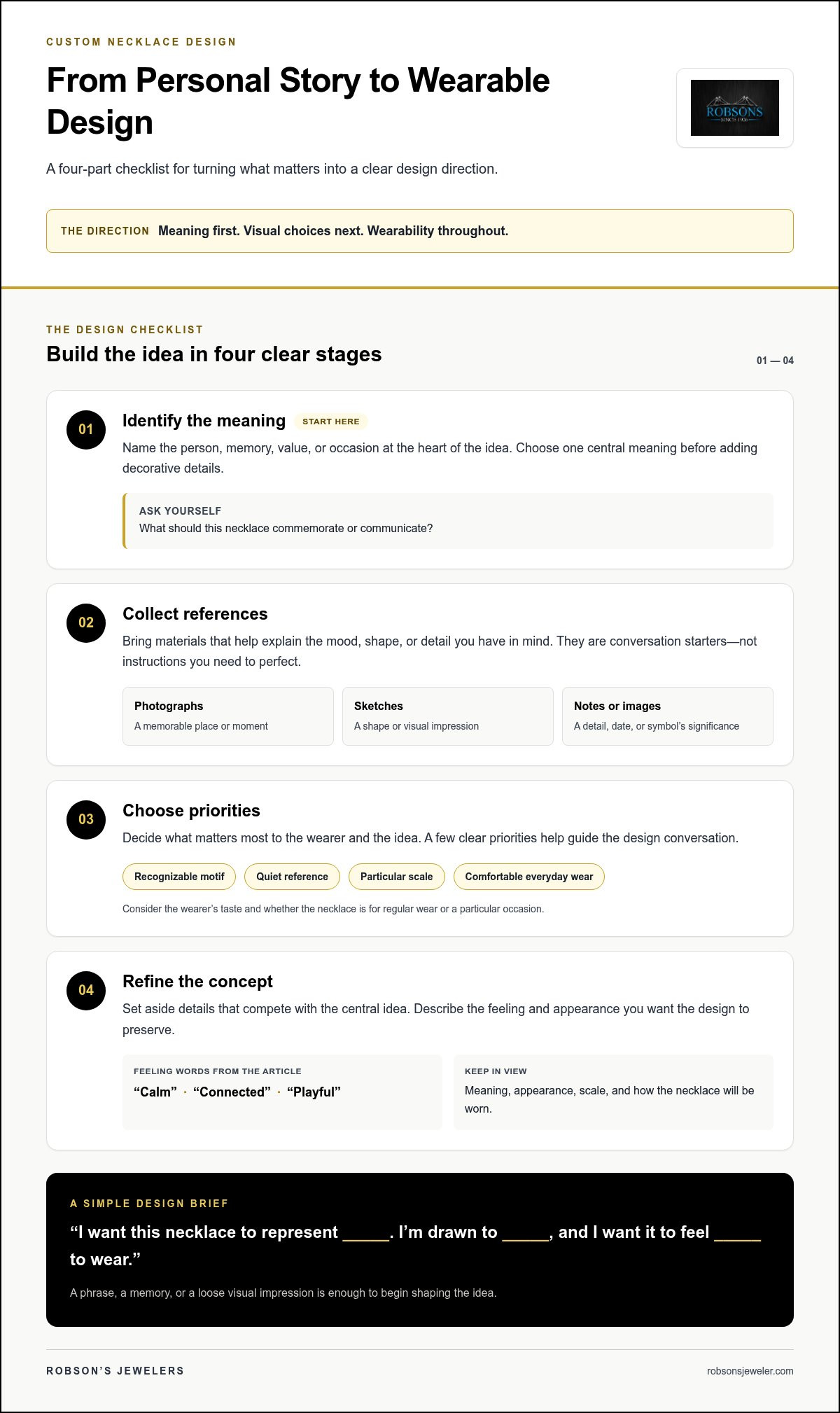
A simple sequence can keep the idea manageable:
Identify the meaning. Name the person, memory, value, or occasion at the heart of the idea.
Collect references. Gather photographs, sketches, written notes, or images that capture a mood, shape, or detail you like.
Choose priorities. Decide what matters most: a recognizable motif, a quiet reference, a particular scale, or comfortable everyday wear.
Refine the concept. Set aside details that compete with the central idea, then describe the feeling and appearance you want to preserve.
Start with the memory, person, or milestone
Ask what the necklace should commemorate or communicate to its wearer. Choose one central idea before gathering decorative details. A meaningful reference doesn’t need to depict a person or event literally; a shape, line, or small visual cue may carry the association more discreetly. A useful design brief translates the meaning into practical preferences about appearance, scale, and use.
Write a few words about the feeling you want the necklace to evoke, such as “calm,” “connected,” or “playful.” Add context if it helps explain why the idea matters. A photograph might show a memorable place, while a note could explain the significance of a date or symbol. The GIA’s The Jewelry Design Process offers context on how design ideas can develop into a piece. Treat references as conversation starters, not instructions you need to perfect.
Choose visual details that make the idea wearable
Consider how the story might translate into a motif, silhouette, and scale. A recognizable motif can make a reference immediately clear; a more abstract shape may keep the meaning personal. The pendant’s silhouette affects its overall mood, while its scale influences how noticeable it feels against the wearer’s clothing and frame. There’s no single right answer. Let the wearer’s taste lead.
Think about use, too. A necklace intended for frequent wear should feel comfortable as part of a daily routine. Chain length affects where the pendant rests, and layering preferences can influence whether the piece should stand alone or sit alongside necklaces the wearer already enjoys. Bring a photo of those pieces if you have one. Comparing the idea with familiar jewelry can make preferences about length, scale, and style easier to explain.
At Robson’s Jewelers, custom jewelry design gives you a place to develop those first thoughts with a local jeweler. If you’re ready to shape your references into a necklace concept, start a custom design conversation.
How to Compare Necklace Materials, Stones, and Wearability
Once the idea has a direction, compare details by asking two questions: what look do you want, and how will the necklace be worn? In custom necklace design, metal tone, pendant proportions, stone presence, and chain style work together. A choice that looks beautiful on its own should also suit the wearer’s habits, wardrobe, and other jewelry.
The necklace’s purpose sets the priorities, while its proportions and materials bring the design into balance. Keep that principle in mind as you weigh visual preference against practical use. There’s no need to rank one metal tone or stone choice above another. Focus on what feels right for this piece and its wearer.
How should you think about metals and overall proportions?
Begin with the metal color the wearer already enjoys. Notice whether their favorite jewelry has a warm, cool, or mixed-metal look, then decide whether the new necklace should coordinate or stand apart. Consider pendant scale next: a smaller form may feel understated, while a more prominent one can draw the eye. Chain length affects where the pendant sits and how visible it is with the wearer’s usual necklines.
Comfort is part of the design, not an afterthought. Consider whether the necklace will be worn often, for special occasions, or layered with pieces the wearer already owns. A design intended for daily wear may benefit from a scale and visual complexity that feel natural in routine use. During a design conversation, describe preferred chain lengths, how the necklace should sit, and whether layering matters. These specifics help clarify the balance you’re aiming for without requiring technical terminology.
When might a gemstone or diamond suit the design?
A stone can introduce color, carry symbolism, or give the pendant a focal point. It might represent a personal connection, echo a color the wearer loves, or bring a touch of sparkle to a quieter design. Some necklaces feel complete without a stone; others use one as the central detail. Decide what role a stone should play before choosing how prominent it should be.
Robson’s Jewelers offers both loose mined and lab-grown diamonds, giving you two diamond options to discuss as part of a necklace concept. The choice is personal. Consider what matters to you about the stone and how you want it to contribute to the piece’s appearance. If you’re learning about diamond considerations, the loose diamond buying guide can help you explore the topic further.
Before settling on details, picture the necklace in real use: worn alone, paired with familiar pieces, or saved for a meaningful occasion. Explain those preferences alongside your visual ideas. This gives the jeweler a clearer understanding of what you like and how the finished necklace should fit into the wearer’s life.
How to Prepare for a Custom Necklace Design Consultation
You don’t need a polished drawing or a vocabulary of jewelry terms to have a useful design conversation. A little preparation can help you explain what matters, compare ideas, and make decisions at a comfortable pace. Treat your notes as a starting point, not a set of instructions the finished necklace must follow exactly.
What should you bring to a necklace design conversation?
Bring anything that helps convey the idea: a meaningful photograph, a rough sketch, a saved reference image, or a few sentences about the story behind the necklace. You can also bring jewelry examples that show the scale, metal color, or layering you prefer. If the piece is for someone else, consider what you know about their taste and the necklaces they already wear.
Explain how and where the necklace may be worn. A piece intended for frequent use may need a different scale or level of detail from one reserved for a special occasion. Use this checklist to organize your thoughts:
Purpose: What memory, relationship, milestone, or personal meaning should the necklace represent?
Inspiration: Which photos, sketches, symbols, or written notes help express the idea?
Existing preferences: What jewelry does the wearer reach for, and what do they enjoy about it?
Design priorities: Which details feel essential, and which are open to change?
Intended use: How often and in what settings do you picture the necklace being worn?
Separate must-haves from flexible ideas before the conversation. The story or symbol might be essential, while the exact silhouette or degree of detail could remain open. This distinction gives the design room to develop without losing its purpose.
How can you make design decisions with confidence?
Start with the meaning and practical preferences, then consider smaller decorative choices. If a decision feels unfamiliar, ask the jeweler to explain the trade-offs in clear, everyday language. You can discuss how a detail may affect the necklace’s appearance, comfort, or relationship to other jewelry without needing to master technical terms first.
A sketch doesn’t have to be accurate, and a reference image doesn’t need to match every part of your vision. Point out what catches your eye and what you would change. Those observations help refine the concept. For a wider view of the custom process, the Baytown custom jewelry design guide offers additional context.
Robson’s Jewelers is a family-owned Baytown jeweler with a history of serving the community since 1926. Bring your ideas, questions, and priorities to a custom necklace design conversation, and take the first step toward shaping a piece around what matters to you.
Create a Custom Necklace with Robson’s Jewelers in Baytown
A necklace shaped around a personal story deserves more than a quick choice from a display. It calls for a conversation where the meaning behind the idea and the practical details of wearing it can be considered together. Robson’s Jewelers is a family-owned Baytown jeweler offering custom jewelry design, with a history in the community dating back to 1926. Whether you’re local to Baytown or coming from Mont Belvieu, Seabrook, La Porte, or Dayton, you can bring your idea to a jeweler in the community.
Why work with a family-owned Baytown jeweler?
A family-owned jeweler can make the design experience feel personal and approachable. You can talk through what the necklace should represent, what the wearer likes, and which details matter most, even if the idea is still taking shape. A conversation leaves room for questions and thoughtful refinement, so you don’t have to arrive with every design decision settled.
Robson’s has served Baytown since 1926, bringing a long local history to its work with customers. That history is part of the context, but the necklace itself should be guided by your story and preferences. Begin with what the piece should express, then discuss the design choices that can help bring that idea into focus.
What is the next step for your necklace idea?
Bring the memory, person, milestone, or symbol you want the necklace to honor. Add a few visual references if they help: a photograph, a rough sketch, a picture of jewelry you like, or a short written note. You can also share how the necklace may be worn and which details are essential versus open to change. These simple starting points give the discussion direction without turning your inspiration into a rigid plan.
Robson’s custom design service can help shape those starting thoughts into a personal necklace concept. The conversation can connect the meaning you want to carry with choices that suit the wearer’s taste and everyday preferences. You don’t need to know the technical terms. Describe what you hope the piece will feel like and what you want it to express.
Whether the idea honors a family connection, celebrates a personal milestone, or gives a meaningful symbol a place close to the heart, custom necklace design begins with what matters to you. Start with the story, then let the details take shape through a thoughtful exchange with a local jeweler.
Ready to explore your idea? Explore custom jewelry design with Robson’s Jewelers and begin shaping a necklace that feels personal to you.
Take the First Step Toward a Necklace That’s Yours
A meaningful necklace doesn’t need to explain its story to everyone. Its value may be in the way it keeps a person, promise, or turning point close, becoming part of your life in a way that feels natural. As you consider custom necklace design, focus on the feeling you want to carry forward. That intention can guide the conversation, even if the final details are still taking shape.
Begin with a simple question: what would make this piece feel unmistakably connected to you or its recipient? Let the answer lead. A personal design experience should leave room for questions, fresh ideas, and thoughtful adjustments along the way, without asking you to have everything figured out at the start.
Robson’s Jewelers can help you explore what your idea could become. Bring your necklace idea to life with Robson’s Jewelers. Your story is a meaningful place to begin, and the next step can be as simple as sharing it.
Frequently Asked Questions
Is custom necklace design right for a meaningful gift?
Yes, custom necklace design can turn a personal story, milestone, or shared symbol into a gift chosen with one person in mind. For example, a necklace might quietly honor a family tradition or celebrate a new chapter. Let the recipient’s taste guide the concept: consider what they usually wear, whether they prefer understated or noticeable jewelry, and how a new piece could fit their everyday habits.
Can I use a family story or meaningful symbol in a custom necklace?
Yes. A family connection, cherished memory, or personal symbol can provide a thoughtful starting point, even if you’d rather not represent it literally. Bring a photograph, a note about the story, or another reference that helps explain its meaning. For instance, a place or family tradition might inspire a simple visual detail that feels personal to the wearer without being immediately recognizable to everyone else.
How does custom necklace design work at a local jeweler?
You share what the necklace is meant to represent and describe the wearer’s preferences. The jeweler can discuss possible design directions with you, connecting the idea to choices that fit the intended look and use. From there, you can refine the concept together. You don’t need to arrive knowing jewelry terminology; describing what you like, dislike, or hope the piece will express is a useful beginning.
How much does a custom necklace design cost?
The cost depends on the scope of the design, the materials selected, and whether gemstones are part of the concept. A simple piece and a design with more involved details can involve different choices. At Robson’s Jewelers, the design conversation is tailored to your goals, so you can discuss your idea and consider how material and stone decisions shape the project.
What should I bring to a custom necklace design consultation?
Bring a short written description, inspiration images, or examples of jewelry the wearer enjoys. A picture of a favorite necklace can help explain preferred scale or how a pendant sits, while a note can clarify the meaning behind the idea. Be ready to describe where and how often the necklace may be worn, what feels comfortable, and which details matter most. Rough references are useful; they don’t need to match the final design.
Can a custom necklace include a diamond?
Yes, a diamond can be considered when it suits the necklace’s purpose and appearance, whether as a subtle accent or a focal detail. Robson’s Jewelers offers loose mined and lab-grown diamonds as options to discuss during custom design. Think about the role you want the diamond to play and the overall feeling you want the necklace to have. Those preferences can guide the design conversation.
Where can I get custom necklace design in Baytown, TX?
Robson’s Jewelers is a family-owned Baytown jeweler offering custom jewelry design. You can visit the showroom or the store’s website to begin discussing a necklace idea. Customers from Baytown and nearby communities, including Mont Belvieu, Seabrook, La Porte, and Dayton, can bring a meaningful reference or simply describe what they hope the piece will express. Start with a personal design conversation to give the idea a clear direction.


Comments