


Cost to Turn a Ring Into a Necklace in Mont Belvieu

A ring’s conversion cost depends on the work needed, so the cost to turn a ring into a necklace in Mont Belvieu varies with the ring’s design, metal, setting, and your preferred necklace style. A jeweler assesses how the ring can be reshaped or incorporated into a pendant and whether adjustments are needed to secure its gemstone. The estimate reflects those details, not a standard price.
It makes sense to want a clear idea of the cost before entrusting a meaningful piece to a jeweler. This guide explains what affects the estimate, what happens during a professional conversion, and how the ring’s condition and design influence the result. You’ll also learn what to consider when choosing a necklace style, how a jeweler evaluates the piece, and what information helps shape a practical plan. Whether the ring carries family history or simply deserves a fresh look, understanding the process can help you make a confident decision while preserving the details that matter to you.
Table of Contents
What factors affect the cost of converting a ring into a necklace?
The estimate reflects the work needed to change the ring’s structure, not simply its existing value. A jeweler considers the setting, gemstone, metal, and pendant design before planning the conversion. For example, a solitaire may be adapted differently from a ring with several stones or an elaborate band. The cost to turn a ring into a necklace in Mont Belvieu therefore depends on the piece and the finished design.
Design complexity matters. A ring might be attached to a pendant fitting, incorporated into a new pendant, or redesigned more extensively. Each option calls for different work. A jeweler evaluates how the ring will hang, whether its setting can remain intact, and how the finished piece will connect to a chain. Preserving an ornate band may involve different work from using only the center stone.
Metal and condition influence the plan. The ring’s metal, purity, and weight affect its material value, while wear or damage can require repair. A worn band or loose setting may need attention before the piece can be worn in a new form. The jeweler assesses the metal and setting, then determines which parts can be retained. Material value and conversion labor are related considerations, but they are separate parts of the estimate.
The gemstone can affect both design and assessment. A gemstone’s carat weight, cut, color, and clarity influence its value. Its size and setting also shape the pendant design. For instance, a larger center stone may need a pendant structure suited to its proportions, while a ring with accent stones calls for a plan that accounts for each one. The gemstone’s characteristics guide the design, but don’t establish the conversion cost on their own.
To understand an estimate, separate design decisions from the ring’s appraised value. A jewelry expert can assess the piece before the conversion plan is finalized. The jeweler can then explain how these factors shape the proposed work:
Existing design: whether the ring’s setting and band can be retained.
Condition: whether wear or damage needs attention before conversion.
Chosen pendant: how the ring or gemstone will be adapted for necklace wear.
Chain connection: how the finished piece will attach and hang.
Brand, craftsmanship, and provenance can affect an engagement ring’s appraisal value, as can market demand for particular gems and precious metals. These appraisal considerations don’t automatically determine the labor involved in conversion. Ask for an estimate that describes the planned design work, repairs, and components to be reused. This breakdown makes it easier to see how the ring’s features shape the finished necklace.
How long does a ring-to-necklace conversion take at local jewelers?
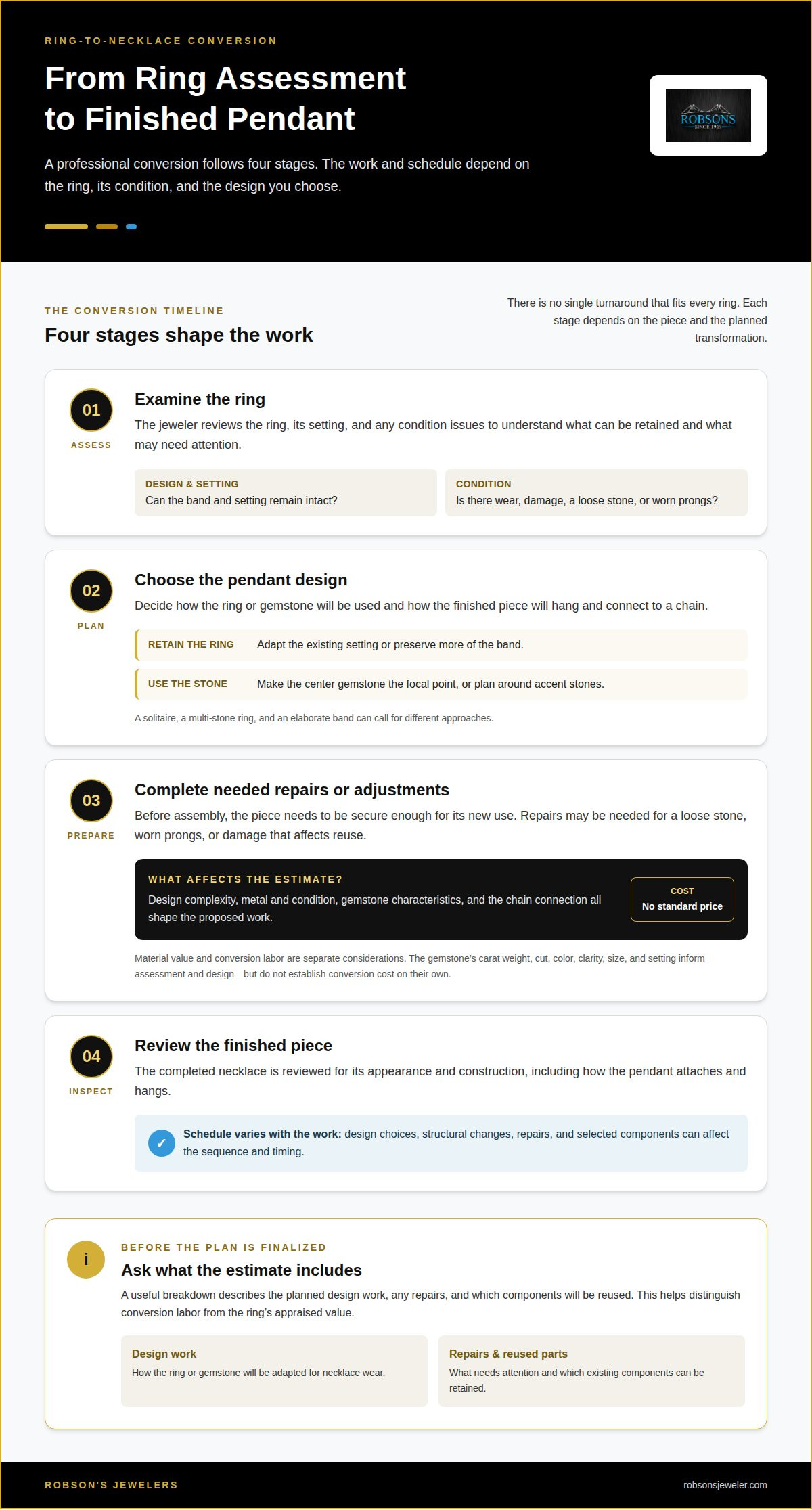
The schedule depends on the work required, not a fixed turnaround that fits every ring. A simple design may need fewer alterations than a ring with multiple stones, an intricate setting, or a damaged band. The jeweler examines the piece, then outlines the work needed to create a pendant that hangs securely. This assessment clarifies the steps before the conversion proceeds.
Design decisions also shape the timeline. If the original setting can be adapted, the jeweler can plan around its existing structure. A new pendant design may call for more planning, especially when the band, center stone, or accent stones need different roles. For example, retaining a wide band involves a different approach from incorporating only the center gemstone. Custom jewelry design helps turn those choices into a defined plan.
Repairs can add work before the conversion. A jeweler may need to address a loose stone, worn prongs, or damage that affects how the ring can be reused. The sequence matters: the piece needs to be secure enough for the planned transformation before becoming a necklace. Jewelry repair can address the ring’s condition as part of the project, with the required work determined by an inspection.
A professional process generally moves through several stages:
Assessment: The jeweler examines the ring, its setting, and any condition issues.
Design planning: The intended pendant form and use of existing components are established.
Preparation: Necessary repairs or adjustments are completed before assembly.
Finishing inspection: The completed piece is reviewed for its appearance and construction.
Each stage can affect scheduling. Reusing the existing setting follows a different process from making more extensive structural changes. Additional repairs can also change the order of tasks. If a particular chain or component is part of the design, that choice can affect the plan and schedule.
Before work begins, the jeweler can explain the planned sequence and what decisions remain. That conversation helps align expectations around design approval, repairs, and completion updates, without assuming every conversion follows the same calendar. For a ring with sentimental value, clear planning matters as much as craftsmanship. Explore custom jewelry design as a way to shape a thoughtful new purpose for a cherished piece.
Your ring
Start by deciding what you want the finished necklace to preserve. A family ring may have an engraving, a distinctive band, or a stone with personal meaning. Those details can guide the design more than a preference for a particular pendant shape. A jeweler considers which features can remain visible and which may need adapting. The aim is to carry the ring’s history into its new form.
Consider how you want the ring to look as a necklace. A center stone can become the focal point, while an engraved band may matter more as a complete form. Using only the stone changes the original ring’s appearance more than retaining its band. These choices affect the design plan and the work involved. Identifying your priority helps the jeweler shape options around what matters most to you.
The ring’s original construction also informs possible designs. A raised setting, a low-profile setting, and a cluster of smaller stones each offer a different starting point. The jeweler examines how the ring sits and how its components might work as a pendant. Orientation matters too: a ring worn upright may need a different arrangement to hang attractively. Discuss the intended look before finalizing the design.
Preserve: Identify an engraving, center stone, or band detail that matters.
Reimagine: Decide whether the necklace should retain the full ring or focus on one component.
Wear: Describe how you expect the pendant to sit against clothing.
Remember: Share any family story or provenance that informs the design.
Personal history can influence the finished piece without dictating its exact form. A wedding band inherited from a relative, for instance, may be best kept recognizable by preserving its original profile. An engagement ring with a center stone and accent stones may suit a design that gives each element a deliberate place. Provenance and craftsmanship can matter when assessing an engagement ring’s value, though appraisal and conversion design serve different purposes.
Bring the ring and explain which details you hope to retain. If you have a preferred pendant shape or a meaningful reference, describe it during the design discussion. The jeweler can relate those priorities to the ring’s structure and outline a suitable approach. This connects sentimental choices to practical design decisions, rather than treating the ring as interchangeable material.
If you’re ready to explore a new form for a meaningful ring, discuss your ring’s redesign.
Robson's Jewelers: Engagement Rings
Robson's Jewelers can help you reimagine a meaningful ring through custom jewelry design. If the piece needs attention before its next chapter, jewelry repair can also address its condition as part of the planning. The right approach depends on the ring’s design and what you hope to preserve, such as its center stone, distinctive setting, or family significance.
Bring your ideas to a design conversation. Whether you want the original ring’s character to remain visible or prefer a more understated pendant, those priorities can shape the concept. Robson's Jewelers also offers engagement rings and loose lab-grown diamonds if you’re considering other jewelry options.
Contact Robson's Jewelers to discuss your ring and the design possibilities.
Give a Meaningful Ring a New Chapter
The cost to turn your ring into a necklace in Mont Belvieu is only one part of deciding what comes next. Consider what you want to carry forward: the ring’s design, its history, or the memory attached to it. Discussing those priorities can help shape a personal direction while accounting for the ring’s condition and construction.
Robson's Jewelers offers custom jewelry design to reimagine a cherished piece, as well as jewelry repair when a ring needs attention. Engagement rings are also part of the store’s selection. These services can help you explore a new design while keeping the ring’s sentimental value central to the process.
Contact Robson's Jewelers to discuss the possibilities for your ring. A thoughtful design can let its story continue in a form you’ll be glad to wear.
Frequently Asked Questions
How much does it cost to turn a ring into a necklace in Mont Belvieu, Texas?
There’s no single cost for every ring conversion; the estimate depends on the design work involved. A jeweler considers whether the existing setting can be reused, whether the band needs alteration, and whether the project includes repairs. For example, adapting a simple setting differs from designing a new pendant around several stones. Assessing your ring and intended design helps define the work.
Which jewelers near Mont Belvieu offer ring-to-pendant conversion?
Robson's Jewelers serves Mont Belvieu and offers custom jewelry design and jewelry repair for ring redesign projects. Custom design can help give an existing piece a new form, while repair can address condition concerns. A design discussion can explore whether to preserve the ring’s original setting or incorporate a stone into a pendant.
What is the labor cost to add a bail to a ring for a necklace?
The labor estimate depends on how the ring can be adapted and how the bail connects to its structure. A jeweler considers the ring’s shape, metal, setting, and the pendant’s intended orientation. A straightforward attachment involves different work from a design that needs structural changes. Ask for an estimate that separates work on the bail from any additional repair or redesign.
How much does it cost to make a custom pendant setting from an existing ring?
The cost depends on the design and the amount of new setting work required. Reusing a center stone in a new mounting involves different tasks from adapting the original setting or incorporating accent stones. The jeweler also considers the ring’s condition and which components can be retained. A specific estimate follows from assessing the piece and defining the pendant design.
Can a jeweler convert a ring into a necklace without damaging the stone or setting?
A jeweler plans the conversion to protect the gemstone and preserve any setting components the design will retain. The process begins with examining the stone, prongs, and mounting for condition concerns. For example, a loose stone may need attention before adapting the ring. The design and work sequence should account for the setting’s structure and how the finished pendant will hang.
Do Mont Belvieu-area jewelers require an appointment or provide estimates for jewelry redesign?
Appointment practices vary by jeweler, while a redesign estimate depends on the ring and proposed work. A useful estimate explains the design, any repairs, and which original components will be reused. For a ring from Mont Belvieu, the design conversation can clarify whether you want a simple adaptation or a custom pendant setting. These details help define the project before work begins.
Comments